Table of Contents
- What’s Really Going On With Down Bedding?
- What exactly is a down feather allergy?
- What symptoms show up when you’re allergic to down feathers?
- Why do down comforters trigger allergies for so many people?
- Is “hypoallergenic down” actually hypoallergenic?
- How does wool compare to down for allergy-prone sleepers?
- Is wool the best down alternative for allergies?
- What type of hypoallergenic bedding should you choose instead?
- What’s the final verdict: wool or down for sensitive sleepers?
- Key Takeaways
- FAQs on Wool Duvet Inserts, Comforters & Sustainable Bedding
TL;DR: A down feather allergy is more common than most people realize — and it often shows up as nighttime congestion, itchy skin, sinus pressure, or sneezing that only happens in bed.
Down traps moisture, dust, and allergens inside its clustered fill, making symptoms worse for sensitive sleepers. Wool, on the other hand, naturally repels dust mites, balances moisture, and avoids the feather proteins that trigger reactions.
If you’re waking up congested or irritated, switching from down to natural wool bedding is one of the simplest ways to restore comfortable, allergy-free sleep.
If you’re concerned about allergic reactions to bedding materials, our Hypoallergenic Haven Guide explains how construction, fiber choice, and finishes can either trigger or reduce sensitivities in your sleep environment.
What’s Really Going On With Down Bedding?
If you’ve been waking up congested, itchy, or dealing with unexplained sneezing at night, you might be experiencing a down feather allergy without even realizing it.
Most people assume that premium down bedding equals premium sleep — until the symptoms show up.
And once they do, they tend to show up fast: nighttime congestion, skin irritation, watery eyes, and that foggy “blocked” feeling in the morning.
What’s wild is how many sleepers blame themselves… when the real culprit is often the feathers inside their bedding.
If you’ve tried hypoallergenic bedding and still notice symptoms, the problem may not be dust or pollen — but the down itself.
Let’s break down what’s really happening — and why switching to the right natural material can feel like your whole sleep environment finally clicks into place.
For sleepers seeking relief from allergens or irritation, our Hypoallergenic Bedding Collection features materials selected for reduced irritants and breathable comfort.
Regenerative Organic Cotton Sheet Set – Soft, Breathable & Sustainable

$189.00
Softer Sheets. Cleaner Sleep. Our organic cotton sheet set are simply better for the earth, and for your sleep. Grown on low-impact regenerative farms that actively heal the soil, our cotton is then woven and finished responsibly. This process eliminates… Read more
What exactly is a down feather allergy?
A down feather allergy happens when your immune system reacts to the proteins, dust, or trapped allergens inside down bedding. Even “clean” down contains microscopic particles your body reads as irritating or unsafe, especially if you’re already prone to allergies or sensitive skin.
Searches like “allergic to down feathers,” “down feathers allergy,” and “allergic reaction to down feathers” all point to the same underlying problem: your bedding is activating your immune system while you sleep.
Down carries potential allergens from three sources:
Feather proteins that trigger reactions
Dust mites that thrive inside the humid inner core of down
Residual dander or organic matter from the original bird
Moisture buildup that amplifies allergen exposure
Even if your down bedding says “washed,” these triggers often remain.
If chemical exposure and fabric finishes are a concern, our Non-Toxic Bedding Collection brings together bedding made without harsh treatments or synthetic additives.
Learn More in our Hypoallergenic Bedding Guide: The Complete Guide
What symptoms show up when you’re allergic to down feathers?
A down feather allergy rarely shows up as just one symptom. It usually appears as a cluster — and most people don’t connect it to their bedding until they switch to something else.
Respiratory symptoms
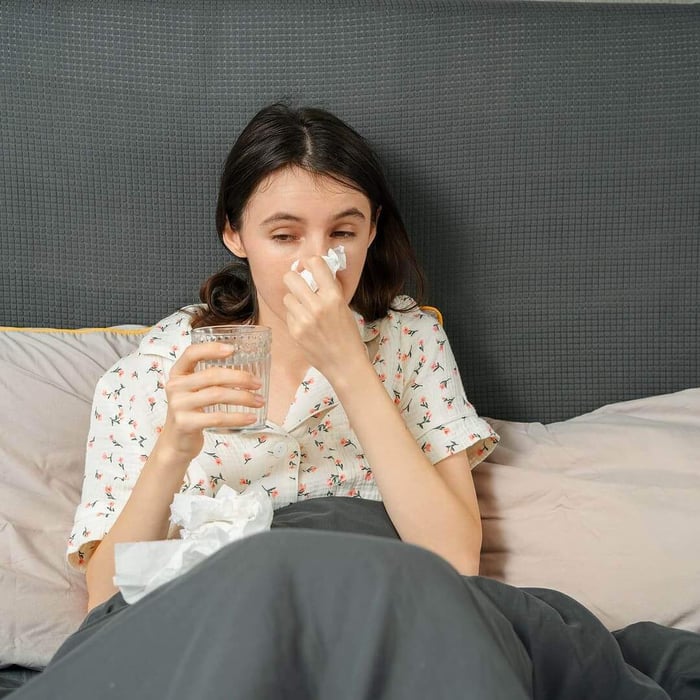
Congestion upon waking
Sneezing bursts
Nighttime coughing
Tightness or wheezing
Skin symptoms
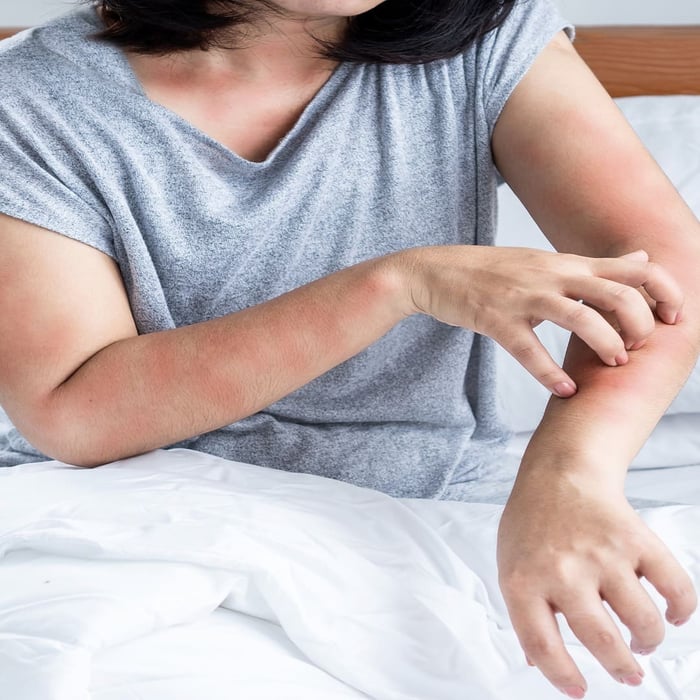
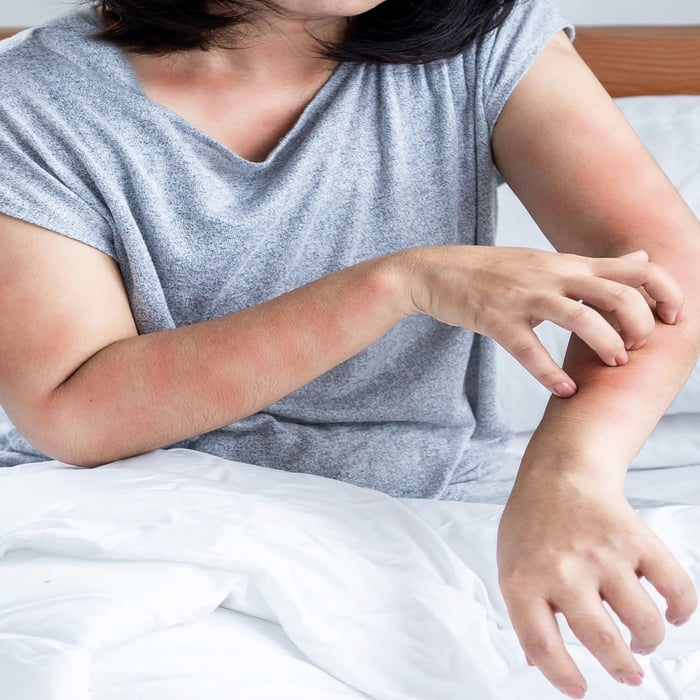
Redness
Itching
Rashes on contact areas
Irritation that worsens at night
If you also struggle with sensitive skin, upgrading your sheets to something gentler — like those in Best Hypoallergenic Bed Sheets for Sensitive Skin - can dramatically reduce irritation.
Eye + sinus symptoms
Watery eyes
Swollen eyelids
Morning headaches
Sinus pressure
Symptoms that flare only at night often indicate environmental triggers in your bedroom — not seasonal allergies. See Why Are My Allergies Worse at Night? for the deeper explanation.
If overheating and night sweats make irritation worse, our Hot Sleepers Collection showcases bedding designed to enhance breathability and moisture release.
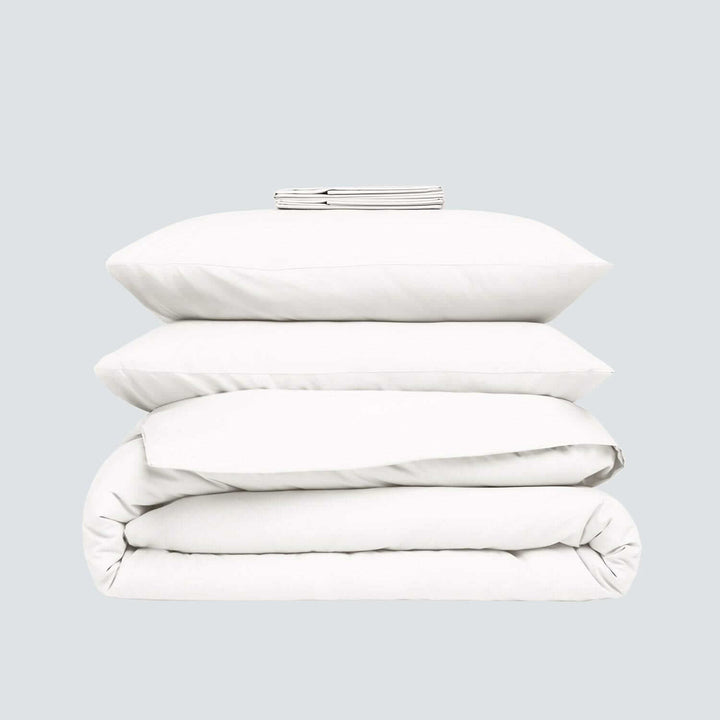
Sustainable & Regenerative Bedding Bundle | No More Night Sweats, Just Deeper Sleep
$598.40
$748.00
Cooler Nights & Deeper Sleep — Every Night Elevate your sleep with the only sustainable bundle crafted from regenerative New Zealand wool and organic cotton for true all-season comfort. These breathable, eco-friendly fibers naturally wick away heat and moisture to… Read more
Why do down comforters trigger allergies for so many people?
Down behaves like a sponge — soft, warm, and excellent at trapping air, but equally excellent at trapping:
Dust
Moisture
Dander
Bacteria
Mites
When humidity builds under your covers (extremely common for hot sleepers), down becomes the perfect environment for allergens to thrive. This is why so many people search terms like “down comforter allergies” and “down bedding allergies.”
If you wake up congested or itchy — especially if it resolves when you travel — the culprit may be the bedding itself.
Is “hypoallergenic down” actually hypoallergenic?
Short answer: not really.
“Hypoallergenic down” simply means the fill has been washed more thoroughly. It does not mean:
No feather proteins
No moisture retention
No microscopic dander left behind
No mite activity inside the clusters
Even goose down labeled “hypoallergenic” can still cause symptoms, which is why many readers eventually find Are Down Comforters Bad for Allergies? while trying to figure out what’s going on.
If your body reacts to feathers, no amount of washing makes down safe.
How does wool compare to down for allergy-prone sleepers?
This is where everything shifts.
Wool — especially high-quality New Zealand wool — works in your favor:
Naturally antimicrobial
Dust-mite resistant
Moisture-balancing instead of moisture-trapping
Breathable and temperature regulating
Free from feather proteins
Where down holds onto humidity, wool disperses it. Where down creates a warm, humid pocket mites adore, wool creates an environment where they cannot thrive.
If you're exploring replacements, Alternatives to Down Comforters a must-read breakdown that shows why wool consistently outperforms both down and synthetics.
Organic Wool Comforter | Made in New Zealand, Breathable All-Season Comfort

$342.00
$380.00
Sleep naturally better with our organic wool comforter Unlike down or synthetic comforters that trap heat, our spun wool design wicks away moisture and prevents overheating, so you stay cool & dry. Designed for deeper sleep with a gentle weight… Read more
Is wool the best down alternative for allergies?
For sensitive sleepers, yes — almost every time.
Wool beats both natural and synthetic alternatives:
Compared to down
No feather proteins
No trapped moisture
No mite-friendly clusters
Compared to polyester (“down alternative”)
Polyester traps heat
Causes sweating → more irritation
Off-gasses
Releases microplastics
Many shoppers assume polyester is safe until they learn what's actually inside.
See Down Alternative Comforters: What's In Your Comforter? for a full breakdown.
What type of hypoallergenic bedding should you choose instead?
Allergy-prone sleepers do best with bedding that:
Regulates temperature
Moves moisture away
Resists dust mites
Avoids feather proteins
Supports clear breathing
This is where wool shines.
If you're curious why wool uniquely keeps your sleep environment dry and calm, read Wool Thermoregulation: The Science Behind Cooler, Drier Sleep; it’s the key to why wool doesn't trigger the same reactions.
When paired with organic cotton, wool creates an environment that supports your skin, immune system, and breathing.
What’s the final verdict: wool or down for sensitive sleepers?
If you’ve been dealing with morning congestion, itchy skin, or sinus pressure, there’s a good chance your bedding may be the source.
A down feather allergy can quietly sabotage your sleep for years before you finally connect the dots.
Switching to wool — especially regenerative New Zealand wool — is one of the most impactful upgrades you can make.
For a deeper dive into why this natural fiber outperforms other materials, see Organic Wool Duvets: Why They're Better for Sleep.
If you also sleep hot, consider reading The Benefits of a Wool Comforter for Hot Sleepers — many allergy sufferers are hot sleepers without realizing it.
Your bedroom should feel like a refuge, not something your body has to fight.
Wool helps make that happen naturally — no feathers, no microplastics, no harsh treatments. Just clean, breathable, restorative comfort.
Organic Wool Duvet Insert & Bedding Set | Sustainable & Regenerative | Made in New Zealand

$475.15
$559.00
Cooler Nights & Deeper Sleep — All Year Long Looking for the perfect organic wool duvet insert and wool bedding set? This complete bundle includes both the duvet insert and cover. (The insert uses the same breathable, temperature-regulating design as… Read more
Key Takeaways
A down feather allergy commonly causes nighttime congestion, sneezing, itchy skin, and sinus pressure—symptoms many people mistake for seasonal allergies.
Down traps moisture, dust, dander, and mites, making it a high-reactivity material for sensitive sleepers.
“Hypoallergenic down” still contains feather proteins and can trigger the same reactions.
Wool naturally resists dust mites, balances moisture, and creates a cleaner, calmer sleep environment.
Polyester “down alternatives” may seem safer but can trap heat and worsen irritation.
The healthiest down alternative for allergies is regenerative New Zealand wool, thanks to its antimicrobial and moisture-regulating properties.
Switching from down to wool bedding can lead to clearer breathing, fewer flare-ups, and deeper, more restorative sleep.
Explore Our Hypoallergenic & Allergy-Friendly Bedding Collection
FAQs on Wool Duvet Inserts, Comforters & Sustainable Bedding
Can a down feather allergy develop suddenly even if I’ve used down for years?
Yes. A down feather allergy can appear gradually, especially if your environment changes. Increased indoor heating, reduced ventilation, higher bedroom humidity, or sleeping hotter than before can all cause down to trap more moisture, dust, and allergens inside the fill. As buildup increases, your immune system eventually hits a threshold and begins reacting, even if down never bothered you in the past.
Are down pillows worse for allergies than down comforters?
Often, yes. Down pillows sit directly beneath your nose and mouth, meaning you inhale allergens at closer range for several hours each night. If you’re experiencing sinus pressure, morning congestion, or sneezing fits, your pillow may be the first thing to replace — especially if you already suspect a down feather allergy.
Is goose down hypoallergenic?
Not in the way most people expect. “Hypoallergenic goose down” simply means the feathers have been washed more thoroughly. It does not remove feather proteins, microscopic dander, or the moisture-trapping structure that allows mites to thrive. If you are allergic to down feathers, goose down will almost always trigger the same reactions as duck down.
Will washing a down comforter reduce allergy symptoms?
Washing may temporarily reduce surface dust, but it cannot remove the internal proteins or the humidity-holding pockets inside the down clusters. Once moisture enters the fill, mites and bacteria can flourish again. For people with down bedding allergies, laundering offers only short-term relief — not a long-term solution.
What’s the best down alternative for allergy-prone sleepers?
Wool — especially regenerative New Zealand wool — is consistently rated the best down alternative for allergies. It naturally resists dust mites, balances moisture, and avoids the proteins that trigger reactions. Polyester down alternatives are widely marketed but often trap heat and worsen irritation, making them less suitable for sensitive sleepers.
How can I tell if my symptoms are caused by a down feather allergy or something else in my bedroom?
Great question — and one that many sleepers struggle with.
A down feather allergy tends to produce a distinct nighttime pattern because the triggers are directly in your bedding. Here’s how to differentiate it from pollen, dust, or general environmental allergies:
1. Your symptoms appear mostly in bed
If congestion, sneezing, throat tightness, sinus pressure, or itchy skin worsen shortly after lying down, the bedding itself is the likely culprit. Down traps allergens right where you breathe.
2. Symptoms improve when you travel or sleep elsewhere
This is one of the strongest indicators. If you sleep clearly in hotels or guest rooms — especially those without down bedding — you’re likely reacting to your own comforter or pillows.
3. Your pillow triggers faster reactions than your comforter
Many people with a down feather allergy find their symptoms intensify when their face is close to the pillow. That’s because pillows release allergens into the air right where you inhale.
4. You wake with a “stuffy” or swollen feeling
Down holds humidity from your breath and skin, creating a warm, damp microclimate mites adore. Nighttime humidity + feather proteins = morning inflammation.
5. Vacuuming, dusting, and air purifiers don’t fix the issue
If the environment is clean but the symptoms remain, the allergen isn’t airborne — it’s embedded in the fill material.
6. Your symptoms flare alongside heat or sweating
Hot sleepers often experience stronger reactions because down traps even more moisture. If you overheat easily, you are at higher risk for down bedding allergies.
⭐ The at-home test most sleep specialists recommend:
Try sleeping one week without any down — pillows, comforter, duvet, or jacket-style blankets. Replace them temporarily with cotton, wool, or a synthetic alternative.
If your breathing is clearer, your skin calmer, or your headaches reduced, that’s a strong sign you’re experiencing a down feather allergy.
⭐ What to do next
Most sleepers find the quickest improvement by replacing:
Down pillow → first
Down comforter or duvet → second
Those two items produce the highest allergen exposure.
Switching to natural wool typically leads to:
noticeably better breathing
fewer flare-ups
calmer, clearer skin
deeper, uninterrupted sleep
This is why wool is widely considered the best down alternative for allergies — without the heat traps or microplastics found in polyester alternatives.