
Table of Contents
- TL;DR (Key Takeaways)
- Signs of Down Feather Allergy: What to Look For
- Is It Your Bedding? Quick Pattern Test
- What This Means for Sleep
- Can You Really Be Allergic to Down Feathers?
- Why Symptoms Appear Suddenly — After Years With the Same Comforter
- What Actually Causes Down-Related Reactions?
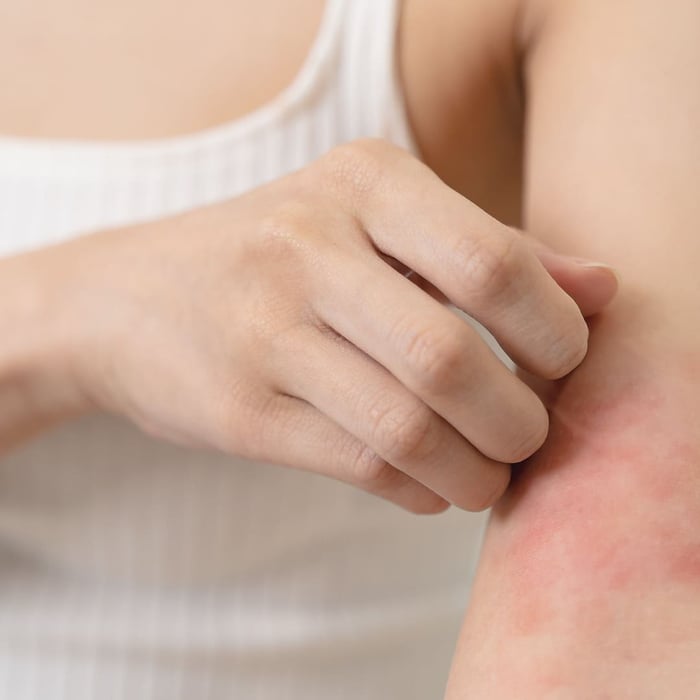
- Can a Down Allergy Cause a Rash?
- The “Hypoallergenic Down” Myth
- Why Environment Matters More Than the Fiber Label
- Down Allergy vs Dust Mite Reaction — How to Tell
- How to Know If Down Is Causing Your Symptoms
- The Best Alternatives for Down Allergy
- Short-Term Steps (If You’re Not Ready to Replace Yet)
- When to Replace Down Bedding
- What to Look for in a Down Replacement
- The Bottom Line
- Ready to Replace Down?
- FAQs on Wool Duvet Inserts, Comforters & Sustainable Bedding
Can You Be Allergic to Down Feathers? Signs, Symptoms, and Better Alternatives for Sleep
TL;DR (Key Takeaways)
Yes — you can be allergic to down feathers.
Common symptoms include nasal congestion, sneezing, itchy skin at night, watery or irritated eyes, coughing, skin rashes, and waking up inflamed or uncomfortable.
In most cases, reactions are caused not only by feather proteins — but by dust mites, trapped moisture, mold, and allergen buildup inside down pillows and comforters.
Use the checklist below to see whether your bedding is likely the trigger.
Signs of Down Feather Allergy: What to Look For
| Symptom | Typical Bedding Trigger? |
|---|---|
| Nasal congestion in bed | ✅ Yes |
| Sneezing under blankets | ✅ Yes |
| Itchy or watery eyes when lying down | ✅ Yes |
| Skin rash or redness after sleeping | ✅ Yes |
| Itchy skin at night (no bites) | ✅ Yes |
| Symptoms worse in bed, better when traveling | ✅ Strong indicator |
| Year-round seasonal allergies | ❌ Often unrelated |
Is It Your Bedding? Quick Pattern Test
Before going deeper, see which pattern matches your experience:
| Symptom Pattern | Most Likely Cause | Next Step |
|---|---|---|
| Sneezing and congestion only at night | Bedding irritation | Read on |
| Worse in bed, better when traveling or in hotels | Dust/mite buildup in your bedding | Strong case for replacement |
| Itchy skin + overheating together | Moisture-trapping fill | See moisture section below |
| Daytime symptoms too | Possible environmental/systemic allergy | Consider medical evaluation alongside bedding changes |
What This Means for Sleep
Bedding-triggered allergies aren’t just annoying — they fragment sleep.
Even mild irritation keeps your body in a low-grade inflammatory state. Congestion, itching, subtle facial redness — these cause micro-awakenings that prevent deep, restorative sleep.
You can spend eight hours in bed and still wake up exhausted.
When the bedding trigger is removed, sleep quality often improves faster than people expect.
Can You Really Be Allergic to Down Feathers?
Absolutely — and more commonly than most people realize.
Some people react to feather proteins directly.
Others react to what down traps over time.
Down pillows and comforters can trigger:
Morning congestion
Sneezing or coughing at night
Prickly “itchy bed” sensation
Watery or irritated eyes
Redness or rashes
Discomfort that worsens when you lie down
Symptoms often build gradually, which is why they’re rarely connected to bedding at first.
But once you understand how down behaves in a sleep environment, the pattern becomes clear.
If your bedding traps heat, moisture, and allergens — your body responds.
Why Symptoms Appear Suddenly — After Years With the Same Comforter
This is one of the most confusing patterns.
You’ve used the same comforter for years — then suddenly, you’re congested or itchy every night.
Down degrades invisibly:
Feathers fracture into fine airborne particles
Dust mite populations multiply year after year
Moisture retention becomes chronic
Allergen load crosses your immune tolerance threshold
The 2–3 year tipping point:
Most down comforters accumulate enough moisture, skin cells, and feather dust within 2–3 years to become meaningful allergy triggers — even if they still look fluffy.
If symptoms appeared recently but nothing “changed,” the fill did.
What Actually Causes Down-Related Reactions?
There are three overlapping mechanisms.
1. Feather Proteins (True Feather Allergy)
Feathers contain natural proteins that can trigger immune responses similar to animal dander.
Common signs:
Sneezing
Watery eyes
Nasal congestion
Throat irritation
Localized rash
Direct skin contact can cause prickly irritation or redness — especially in hot sleepers.
But feather proteins are only part of the story.
2. Dust Mites Living Inside Down (Primary Driver)
Most reactions blamed on feathers are actually dust mite reactions.
Down creates an ideal environment:
Warm. Humid. Full of skin cells.
Once mites settle inside the fill, they’re difficult to remove — even with washing.
Typical signs:
Nighttime sneezing
Morning congestion
Itching without visible rash
Symptoms worst while lying down
Your face is inches from the fill for hours. That proximity matters.
For a deeper look at how material structure affects mite survival, see our wool and dust mites guide.
3. Moisture, Mold & Heat Buildup
Down insulates well — but it struggles to release moisture.
Overnight it absorbs sweat and humidity. If that moisture doesn’t escape, you get:
Damp or clammy bedding
Musty odors
Mold or mildew spores
Heat-triggered itching
The midnight-to-3am shift is telling. What feels fine when you get into bed can become irritating once heat and humidity build inside the fill.
Moisture + heat + friction = irritation.
Down amplifies all three.
Can a Down Allergy Cause a Rash?
Yes.
Some people experience contact dermatitis without respiratory symptoms.
Look for:
Red or inflamed skin
Burning or itching overnight
Dry or flaky patches
Rash localized where bedding touches
If it improves when you sleep elsewhere, that’s a strong environmental clue.
The “Hypoallergenic Down” Myth
“Hypoallergenic down” is a marketing phrase — not a structural fix.
Washing feathers removes debris.
It does not change how down behaves long-term.
Down clusters are designed to trap air and hold warmth. Over time, they also trap skin cells and retain humidity — ideal conditions for dust mites.
Hypoallergenic down usually means:
Washed feathers
Removed surface debris
It does not mean:
No feather proteins
Dust-mite resistance
Ongoing moisture control
Structural breathability
If symptoms persist, the issue isn’t your immune system. It’s the architecture of the fill.
Why Environment Matters More Than the Fiber Label
Allergens thrive in warmth and humidity.
They struggle in dry, well-ventilated environments.
When bedding continuously releases moisture instead of trapping it, dust mite populations decline and irritation often decreases.
That’s why symptoms are timing-specific.
The problem isn’t the first hour in bed.
It’s what happens after heat and humidity build.
Material structure determines whether your bed stays dry enough to remain allergy-safe over time.
Down Allergy vs Dust Mite Reaction — How to Tell
More likely feather protein driven:
Itching exactly where bedding touches skin
Immediate irritation when lying down
Rapid improvement when traveling
More likely dust mite driven:
Sneezing bursts at night
Morning congestion that clears after getting up
Itching without visible rash
Bedding feels warm or damp by morning
Different triggers.
Same structural solution: bedding that doesn’t trap moisture or allergens.
How to Know If Down Is Causing Your Symptoms
The 72-Hour Swap Test
Remove all down bedding
Replace with wool and organic cotton
Track symptoms for three nights
If congestion, itching, or sneezing improve — even partially — down was likely the driver.
Additional indicators:
Hotel test: If you sleep better away from home, your bedding is suspect.
Overheating timing: If itching follows feeling hot, moisture is the issue.
Feather dust: Visible particles in light = fill breakdown.
The Best Alternatives for Down Allergy
Environmental Behavior
| Material | Heat | Moisture | Dust Mite Risk |
|---|---|---|---|
| Down | Traps | Holds | Very high |
| Synthetic | Mixed | Moderate | Medium |
| Wool | Releases | Regulates | Low |
Long-Term Cleanliness
| Material | Degrades | Creates Irritating Dust |
|---|---|---|
| Down | Yes (2–3 years) | Yes |
| Synthetic | Sometimes | Sometimes |
| Wool | No | Naturally low |
1. Wool-Filled Comforters (Clear Structural Winner)
For sensitive sleepers, wool is the most reliable replacement.
A regenerative wool comforter:
Continuously releases moisture
Maintains airflow through the fill
Naturally resists dust-mite-friendly conditions
Avoids chemical treatments
Paired with organic cotton sheets, it supports dry, calm sleep without overheating.
2. Organic Cotton Bedding
Breathable. Chemical-free. Skin-friendly.
If you’re comparing options, our hypoallergenic comforter guide explains how fills perform across their full lifespan.
3. Down-Alternative (Synthetic)
Better than feather protein exposure — but still moisture-trapping.
Often a temporary step, not a long-term structural fix.
Short-Term Steps (If You’re Not Ready to Replace Yet)
These reduce exposure but don’t solve the structural issue:
Wash bedding weekly at 60°C (140°F)
Use true dust-mite-proof encasements (<6 microns)
Keep bedroom humidity under 50%
Improve nighttime airflow
They buy time. They don’t change how down behaves.
When to Replace Down Bedding
Replace if:
You itch consistently in bed
Morning congestion is common
The comforter feels damp or heavy
Sneezing occurs when shaking it out
You sleep better elsewhere
It’s older than 2–3 years
Down ages poorly in humid sleep environments.
What to Look for in a Down Replacement
Removing down solves the feather protein problem. But if the replacement still traps heat and moisture, dust mites move in just as fast — and your symptoms return within months.
A down replacement that works long-term needs to:
- Actively release moisture rather than absorb it
- Maintain that moisture release over years, not just when new
- Allow airflow through the fill, not just across the surface
- Come without chemical treatments that add a second irritant layer
Most synthetic alternatives and many "hypoallergenic" options meet one or two of these criteria. Very few meet all four consistently over the lifespan of the product.
→ See how our wool comforter is designed to meet each of these criteria
Still comparing? Our hypoallergenic comforter guide walks through material performance in detail.
The Bottom Line
Down is marketed as luxury.
But practically, it often fails sensitive sleepers.
It traps allergens.
It holds moisture.
It worsens irritation over time.
If your nights feel itchy, stuffy, or inflamed — it’s not you.
It’s your bedding.
Ready to Replace Down?
If symptoms improve away from home — or your comforter is past the 2–3 year mark — the next step isn’t another label.
It’s choosing a fill structure that releases moisture every night so allergen buildup can’t compound.
Organic Wool Comforter

$342.00
$380.00
Our breathable organic wool comforter keeps you dry, balanced, and deeply comfortable—all night, every night. Spun wool naturally wicks moisture and regulates temperature, so you never overheat. Unlike down that traps heat or synthetics that make you sweat, our breathable… Read more
Organic Wool Comforter
Continuous moisture release
Airflow through the fill
Naturally resistant to dust-mite conditions
No chemical irritants
→ Explore the Wool Comforter
Still comparing materials?
See our hypoallergenic comforter guide for long-term performance differences.
Still troubleshooting symptoms?
If you’re not fully sure down is the root cause, these guides can help clarify what’s happening:
Why Does My Blanket Make Me Itch? — A full breakdown of bedding-triggered irritation beyond feathers, including moisture, friction, and fabric reactions.
Itchy Skin at Night: Allergy or Overheating? — How to tell whether your symptoms are immune-driven or heat-driven.
If your pattern matches what you’ve read here, replacing moisture-trapping fill is usually the turning point.
FAQs on Wool Duvet Inserts, Comforters & Sustainable Bedding
Can you be allergic to down feathers?
Yes. Feather proteins, dust mites living inside the down, and moisture buildup can all trigger nighttime allergies and itchy skin.
What are the symptoms of being allergic to down?
Congestion, sneezing, itchy skin at night, watery eyes, coughing, hives, and “itchy bed” sensations — especially when lying down.
Is down hypoallergenic?
No. Even “hypoallergenic” down can hold dust mites and moisture. It’s not ideal for sensitive skin or allergy sufferers.
How do I know if dust mites are the problem instead of feathers?
If you wake congested, sneeze at night, or feel itchy in bed with no visible rash → dust mites are the likely trigger.
What is the best bedding for people allergic to down feathers?
Wool comforters and organic cotton bedding — both naturally hypoallergenic and dust-mite-resistant — are the top options.
Why does my bed make me itch at night — and could down feathers be the cause?
Nighttime itching is one of the top reported symptoms in bedding-related allergies. Down comforters trap heat, humidity, dust mites, and feather proteins, which irritate the skin barrier and inflame nerve endings. When your body temperature rises during sleep, circulation increases and amplifies itch sensations. If the itching improves when you switch to wool or organic cotton, or when you sleep away from home, down is almost certainly contributing to the irritation. This is especially true for anyone searching terms like “itchy skin at night,” “bed feels itchy,” “itching in bed but no bites,” or “why is my bed making me itch.” Wool avoids these issues entirely by being breathable, moisture-wicking, and naturally resistant to mites and mold, making it the healthiest alternative for sensitive sleepers.