Table of Contents
- Why Does My Blanket Make Me Itch? The Real Reason You’re Uncomfortable
- 1. Your Blanket Traps Heat (the #1 cause of nighttime itching)
- 2. Detergent Residue (fragrances + softeners = irritation)
- 3. Dust Mites (especially in older blankets)
- 4. Synthetic Fibers Can Irritate Skin Over Time
- 5. Heat + Sweat = Itching (Even Without Allergies)
- 6. Buildup Inside the Blanket (Even When It Looks Clean)
- 7. Fabric Finishes + Chemical Treatments
- So Is It an Allergy — Or Just Irritation?
- Blanket Materials and Sensitive Skin: What Actually Matters
- How to Fix an Itchy Blanket (And Why Most Fixes Are Temporary)
- When to Stop Treating Symptoms and Re-Evaluate Your Blanket
- A Quick Way to Think About the Problem (Without Guessing)
- Final Takeaway: Why the Problem Keeps Returning
- Ready to Change the Environment?
- FAQs on Wool Duvet Inserts, Comforters & Sustainable Bedding
If you're wondering "why does my blanket make me itch", the cause is usually what your bedding traps, not your skin.
Heat, moisture, and irritants build up under certain blankets, creating the perfect conditions for nighttime itching — even if you don’t have sensitive skin or allergies.
Verdict:
Most blanket-related itching isn’t a true allergy. It’s caused by poor breathability and moisture retention.
Washing your blanket or switching detergents rarely fixes the heat-itch cycle because it can’t change the structure of non-breathable or synthetic fibers.
Relief comes from switching to bedding designed to release heat and moisture instead of trapping it against your body.
Who This Applies To
You wake up itchy, hot, or uncomfortable under your blanket
The itching is worse at night than during the day
Washing your bedding hasn’t fully solved the problem
Synthetic or down bedding feels clammy or irritating
Who This Likely Does Not Apply To
You experience itching during the day as well
You have hives, swelling, or breathing symptoms
A doctor has diagnosed a medical skin condition
The Next Step If This Sounds Like You
If trapped heat and moisture are the cause, the solution isn’t creams or detergents —
it’s choosing a bedding setup designed to stay dry and breathable all night.
The Bedding Setup Designed to Stop Nighttime Itching
If your blanket makes you itch because it traps heat, moisture, or irritants, this setup is designed to address the root cause — not just mask the symptoms.
👉 Get itch-free sleep
Organic Wool Comforter

$342.00
$380.00
Our organic wool comforter is designed to keep you dry, balanced, and deeply comfortable all night. Unlike down or synthetic comforters that trap heat, our spun wool design wicks away moisture and prevents overheating, so you stay cool & dry.… Read more
Designed to address this problem by:
Releasing heat and moisture instead of trapping them against your skin
Naturally resisting dust mites and irritants without chemical treatments
Balancing warmth without overheating, preventing the itch–sweat cycle
This is the setup people move to after detergents, covers, and “cooling” fabrics fail.
Why Does My Blanket Make Me Itch? The Real Reason You’re Uncomfortable
If you’ve ever typed “why does my blanket make me itch” into Google at 2 a.m., you’re not alone — nighttime irritation is incredibly common.
Most people assume itching at night comes from dry skin, seasonal allergies, or “something in the air.”
But your blanket plays a much bigger role than you might think.
Blankets create a micro-environment around your body — heat, moisture, airflow, and potential irritants.
When any of these fall out of balance, your skin reacts quickly.
The important thing to understand is this:
Itching at night is usually a bedding problem, not a personal one.
Understanding why it happens is the first step toward choosing the right long-term fix.
If you’ve ever wondered “why does my blanket make me itch,” the cause usually comes down to heat buildup, friction, or irritants trapped in the fabric.
Below are the most common reasons blankets trigger nighttime itching — so you can recognize which pattern applies to you before deciding what to change.
1. Your Blanket Traps Heat (the #1 cause of nighttime itching)
A huge number of hot sleepers eventually end up Googling “why does my blanket make me itch,” especially when nighttime irritation suddenly gets worse.
When your blanket traps body heat, your skin warms up — and warm skin reacts faster and feels itchier.
Heat buildup leads to:
dilation of blood vessels
increased nerve sensitivity
higher sweat production
moisture buildup against the skin
That combination can make even a normal blanket feel irritating or prickly by the middle of the night.
Synthetic materials like polyester and microfiber are common culprits because they trap heat and restrict airflow.
If your itching feels worse under heavy bedding, it can look similar to certain down comforter allergy symptoms — even when a true allergy isn’t present. The key difference is whether irritation improves when heat and moisture are reduced.
To stop this spiral, the blanket must do more than just feel soft—it must actively move heat away from the skin. This is why certain natural fibers function as the standard for itch-relief — they actively vent heat instead of storing it.
2. Detergent Residue (fragrances + softeners = irritation)
If your blanket was washed recently and the itching started soon after, detergent residue is often involved.
Many detergents leave behind:
fragrances
preservatives
optical brighteners
fabric softener residue
These chemicals cling to fabric fibers and transfer to skin overnight, causing irritation that can feel like an allergy — even when it isn’t.
If your blanket smells strong, feels waxy, or feels “too soft,” residue is likely contributing to the problem.
While switching detergents may help for a few days, it rarely provides a permanent fix for synthetic or low-quality blankets. Materials like polyester and microfiber are chemically 'sticky'—they are designed to hold onto the fragrances and softeners that cause irritation. If your blanket is a synthetic blend, you can't wash the itch away; the material itself is the container for the irritant.
That’s why detergent changes alone don’t always provide lasting relief.
3. Dust Mites (especially in older blankets)
If your itching starts the moment you pull the covers up or feels worse first thing in the morning, dust mite activity may be contributing to the problem.
Dust mites don’t live on the surface of your bedding — they thrive deep inside the fill of blankets that trap warmth and humidity.
The Synthetic / Down Trap
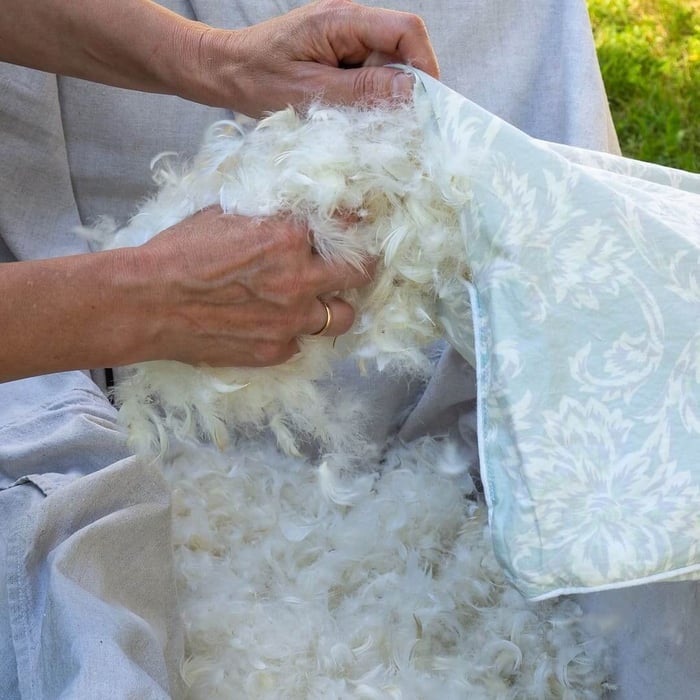
Polyester and feather-filled blankets tend to create a warm, stagnant micro-environment. That “wet heat” is exactly what dust mites need to survive and multiply, even in otherwise clean bedrooms.
This is why many people begin searching whether down comforters are bad for allergies when nighttime itching appears suddenly or gets worse over time. The symptoms can look like an allergy, even when the underlying issue is environmental rather than immunological.
Why Washing Often Fails
Washing can reduce mites on the surface, but it rarely eliminates colonies living deep inside the fill. Unless a blanket is repeatedly washed at very high temperatures — which most materials can’t tolerate long-term — the internal conditions that allow mites to return remain unchanged.
As long as a blanket stays warm and humid overnight, dust mites can continue to recolonize.
Why Blanket Construction Matters
Dust mites rely on moisture vapor to survive. Materials that allow moisture to linger support that cycle. Materials that disrupt moisture retention make colonization harder to sustain.
Understanding this distinction helps explain why dust-mite-related itching often keeps coming back — even after cleaning.
4. Synthetic Fibers Can Irritate Skin Over Time
Many synthetic blankets feel soft when they’re new. But as materials like polyester, acrylic, microfiber, and fleece age, they often begin to pill, break down, or hold static.
That degradation can lead to:
irritation on exposed areas of skin
a static-electric “cling” sensation
a plasticky warmth that doesn’t release
Over time, these fibers can create low-grade friction against the skin — enough to trigger itching even without an allergy.
Because this friction is structural to the fiber, it cannot be “softened away” with detergents or treatments. Once a blanket begins to pill or hold static, the irritation isn’t chemical — it’s mechanical.
At that point, stopping the itching requires changing how the blanket interacts with your skin, not how it’s washed.
5. Heat + Sweat = Itching (Even Without Allergies)
This is one of the most misunderstood causes of nighttime itching.
It often follows a simple pattern:
heat → sweating → trapped moisture → skin irritation
When moisture stays trapped under a blanket, your skin becomes hyper-sensitized. Damp skin reacts more intensely to friction, pressure, and fiber contact.
At that stage:
fans and “cooling tech” don’t fix the problem
surface cooling can’t override a non-breathable barrier
moisture vapor still condenses into sweat against the skin
The difference isn’t between hot and cool — it’s between sleeping under a blanket that traps moisture and sleeping in a regulated microclimate that releases it before irritation begins.
Until that moisture pathway changes, the itch–sweat cycle tends to repeat night after night.
6. Buildup Inside the Blanket (Even When It Looks Clean)
Many blankets act as irritant sponges.
Because synthetic and down fills are designed to trap air, they also trap:
body oils
sweat residue
dead skin cells
pet dander and allergens
Much of this buildup settles deep inside the fill, where standard wash cycles can’t fully reach.
This is why blankets can look clean — and still cause itching.
Washing may reduce surface residue temporarily, but if the internal structure continues to retain moisture and oils, irritation often returns. The issue isn’t hygiene alone — it’s how certain materials hold onto what irritates skin overnight.
To prevent recurring buildup, the blanket itself has to resist moisture retention rather than absorb and store it.
7. Fabric Finishes + Chemical Treatments
Many blankets — especially synthetic ones — are treated with surface chemicals designed to improve appearance or durability, including:
stain-resistant coatings
wrinkle-free finishes
anti-pilling resins
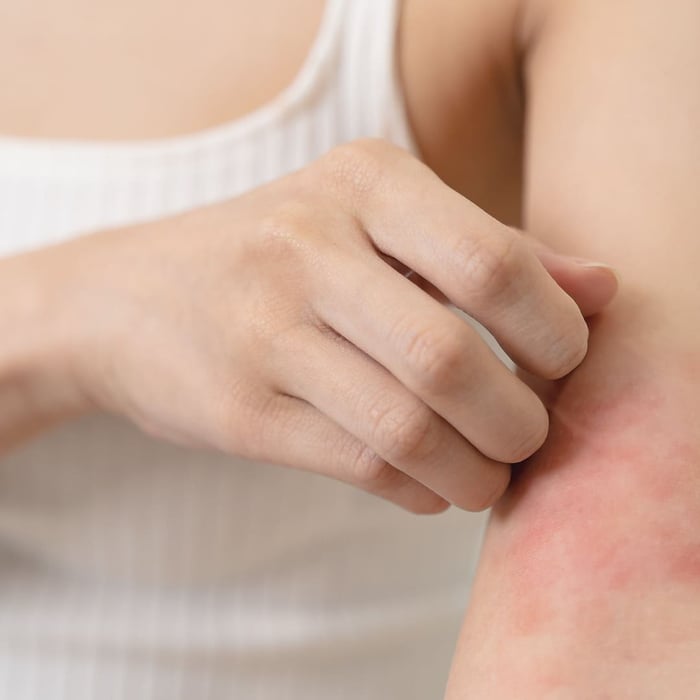
These treatments don’t remain inert. When warmed by body heat and combined with overnight moisture, they can transfer to skin and trigger itching, redness, or irritation.
Because these finishes are bonded to the fibers themselves, they can’t be fully removed through washing. As long as the treated fabric stays in contact with your skin overnight, exposure continues.
This is one reason blanket-related itching often appears only at night, even when bedding feels comfortable during the day.
Understanding whether irritation is coming from what’s embedded in the fabric, not just surface residue, helps explain why the problem can persist despite frequent laundering.
So Is It an Allergy — Or Just Irritation?
Most people who think they have a “blanket allergy” don’t.
Nighttime itching is far more commonly caused by a combination of:
trapped heat
retained moisture
detergent residue
chemical fabric finishes
synthetic fibers
dust-mite activity
A true bedding allergy is relatively uncommon and usually includes symptoms such as:
hives
swelling
intense redness
difficulty breathing
If your symptoms appear primarily at night and fade during the day, irritation — not allergy — is the more likely explanation.
This distinction matters because irritation doesn’t reliably respond to antihistamines or topical creams. It tends to persist until the overnight environment itself changes.
Blanket Materials and Sensitive Skin: What Actually Matters
If your blanket makes you itch, the issue is rarely “sensitive skin” alone. It usually comes down to how different materials handle heat, moisture, and surface contact once you’re asleep.
Some materials amplify irritation by design. Others disrupt the conditions that allow irritation to build in the first place.
Understanding this difference explains why itching persists under some blankets — and why it disappears under others.
Materials That Disrupt the Itch Cycle
Certain natural fibers — specifically regenerative wool and long-staple cotton — are structurally designed to maintain a dry, low-friction sleep environment.
They do this by:
Venting heat instead of trapping it, helping prevent the blood-vessel dilation that intensifies itch signals
Managing moisture vapor, absorbing humidity before it condenses into liquid sweat against the skin
Avoiding fiber-bonded chemical resins, which are common in synthetics and can transfer to skin overnight
Because these fibers regulate the sleep microclimate at a structural level, they don’t just feel better — they reduce the conditions that trigger nighttime skin sensitization.
This is why wool and cotton repeatedly appear in searches comparing bedding materials for irritation, overheating, and allergy-like symptoms.
Materials That Commonly Trigger Irritation
Synthetic fills such as polyester and microfiber are among the most frequently reported materials in searches like “why does my blanket make me itch.”
They tend to:
trap heat instead of releasing it
retain moisture against the skin
accumulate detergent residue and body oils
create friction as fibers pill or break down over time
As these effects compound, irritation often increases — even when a blanket looks clean or feels soft to the touch.
Symptoms such as facial itching, throat irritation, or morning congestion can sometimes resemble goose down allergy symptoms, even when the underlying issue is irritation rather than a true allergy.
Why Breathability Matters More Than Softness or Thread Count
Many people assume surface softness or thread count is the problem. In reality, breathability and moisture regulation play a much larger role in how skin reacts overnight.
A blanket can feel soft initially and still create an environment that leads to itching once heat and humidity build up during sleep.
This is why airflow and vapor release matter more than labels or numbers — a distinction explained further in our breathable bedding guide, which looks at how materials behave once you’re actually asleep.
The Key Distinction
Blankets don’t cause itching because they’re “rough.”
They cause itching because of what they do to heat and moisture overnight.
Until the overnight environment is disrupted at the material level, irritation often returns — regardless of how clean, new, or soft a blanket feels.
How to Fix an Itchy Blanket (And Why Most Fixes Are Temporary)
When a blanket starts causing irritation, most people try a few common adjustments first. These can sometimes reduce symptoms briefly — but it’s important to understand why they rarely work long-term.
Rewashing with Hypoallergenic Detergent
This can remove surface residue, but it doesn’t change how a blanket handles heat and moisture. If the fibers themselves trap warmth or humidity, the conditions that trigger itching remain — even after washing.
Increasing Airflow
Lowering the thermostat or using a fan may cool exposed skin, but it doesn’t address moisture buildup under the covers. If humidity stays trapped, the itch–sweat cycle continues.
Adding a “Barrier” Layer
Placing a cotton sheet between you and a synthetic blanket can reduce direct friction, but it often creates a double-insulation effect — increasing heat retention rather than reducing it.
The Limitation to Understand
These approaches manage symptoms, not causes. When irritation is driven by how a blanket behaves overnight, surface-level adjustments can’t fully interrupt the cycle.
When to Stop Treating Symptoms and Re-Evaluate Your Blanket
At a certain point, ongoing irritation isn’t a sign that you haven’t tried enough fixes — it’s a sign that the blanket itself is no longer supporting healthy sleep.
You should consider the blanket a contributing factor if:
Itching returns quickly
You’ve washed it repeatedly, but irritation comes back within a night or two.The fabric is breaking down
Pilling, shedding, static, or fuzziness indicate increasing friction against the skin.It feels clammy or plasticky
A sign heat and moisture are being held instead of released overnight.Odors linger despite washing
Suggests internal buildup rather than surface residue.Your skin improves elsewhere
Sleeping comfortably in another bed points to the bedding, not your body.
When these patterns show up, the issue is no longer cleanliness or sensitivity. It’s how the blanket behaves while you sleep.
A Quick Way to Think About the Problem (Without Guessing)
Different symptoms point to different failure modes — but they all trace back to the same structural issue.
If irritation flares overnight → moisture and heat are being trapped
If skin feels inflamed or reactive → friction, chemicals, or buildup are involved
If you wake up sweaty or clammy → breathability is failing
When a blanket can’t manage heat and moisture consistently, symptoms vary — but the cycle stays the same.
Final Takeaway: Why the Problem Keeps Returning
If you’re asking “why does my blanket make me itch?” the cause is almost never your skin. It’s the overnight environment your bedding creates.
Most blanket-related itching is driven by trapped warmth, retained moisture, and accumulated irritants. Because these factors are structural to the blanket itself, they can’t be solved permanently with better detergents, extra wash cycles, or short-term fixes.
Until the overnight environment changes, irritation tends to return — even when symptoms fade temporarily during the day.
Ready to Change the Environment?
If you’ve ruled out detergents, creams, and quick fixes, the remaining step is choosing a bedding system designed to regulate heat and moisture overnight — rather than trap them.
This is where the solution is completed.
👉 Shop the Itch-Free Bedding Collection
Shop Our Organic Bedding Collection
FAQs on Wool Duvet Inserts, Comforters & Sustainable Bedding
Why does my blanket make me itch even when it looks clean?
Blankets trap far more than we realize: heat, body oils, detergent residue, and microscopic dust mites. When warmth and moisture build up, the fibers can irritate your skin — especially if your blanket is synthetic or tightly woven. Even a “clean” blanket can hold irritants deep in the layers.
Can certain blanket materials make sensitive skin itch more?
Yes. Synthetic fibers like polyester, microfiber, and plush fleece often trap heat and humidity against the skin, which intensifies itching. Down and feather blankets can shed tiny particles that irritate skin and sinuses. Natural fibers like wool or organic cotton are far gentler because they breathe and wick moisture instead of holding it in.
Why do I only get itchy at night and not during the day?
Itching gets worse at night for two reasons: your body naturally warms up as you fall asleep, and your nervous system becomes more sensitized. If your blanket traps heat, that extra warmth accelerates sweating, dryness, and irritation — which your brain interprets as itch. That’s why the problem disappears when you get out of bed.
Can detergents or fabric softeners make my blanket itchier?
Absolutely. Many detergents leave behind brighteners, fragrances, and softeners that sit in the fibers long after washing. When humidity rises under your blanket, these chemicals loosen and transfer to your skin, causing itching, tingling, or mild redness. People often think it’s an allergy — but it’s usually buildup.
Why do synthetic blankets make me itch more than natural ones?
Because synthetics don’t breathe. When heat has nowhere to escape, your skin gets hot, damp, and irritated. That microclimate encourages dust mites and bacteria, which make the itching worse. Natural fibers like wool regulate temperature and humidity, making them a better option for people who itch when they sleep.
What causes nighttime itching from blankets, and how do I fix it for good?
Nighttime itching is almost always the result of trapped heat + moisture + irritants — a combination that turns your blanket into a micro-environment that your skin can’t tolerate. Here’s how each factor contributes:
Heat buildup: When a blanket doesn’t breathe, your skin temperature rises. Warm skin sends itch signals faster than cool skin does.
Moisture accumulation: Sweat becomes trapped, making your skin feel sticky or tingly. Moisture also breaks down fibers and detergent residue.
Synthetic fibers: Polyester, plush fleece, and microfiber cling to oils and detergents, causing friction and irritation.
Dust mites: They thrive in warm, humid bedding and can trigger itching even if you’re not allergic.
Feathers or down: Tiny broken particles can irritate your skin, eyes, and sinuses without causing a full allergy.
The fastest fix: switch to breathable, natural fibers like wool or organic cotton. These materials regulate temperature, wick away moisture, and don’t trap allergens in the same way synthetics do. Many people notice their nighttime itching improves within a day or two when they stop sleeping under heat-trapping blankets.