

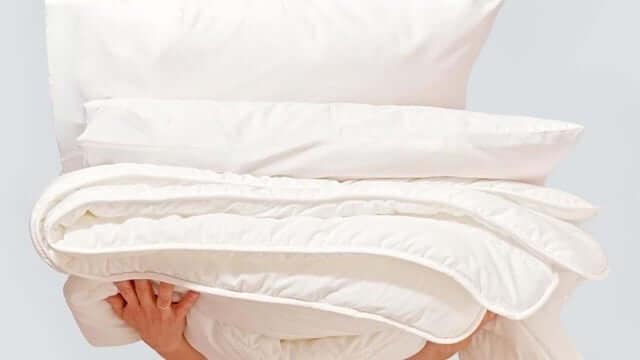
What Makes a Comforter Truly Hypoallergenic? (Structure, Moisture, and Dust Mite Resistance)
The difference isn’t the label — it’s the environment your comforter creates. A comforter that retains heat and moisture can contribute to a warmer, more humid sleep environment. Materials that handle moisture vapour well, including wool, can help the bed feel drier — but no comforter prevents allergies or replaces appropriate allergen-control measures.
What Does “Hypoallergenic Comforter” Really Mean? (And Why It’s Not Regulated)
“Hypoallergenic” isn’t regulated — any product can claim it.
So choosing the right hypoallergenic comforter isn’t about the label. It’s about how the material behaves under real sleep conditions.
If you’re searching for the best hypoallergenic comforter, something in your sleep environment has already failed you.
Our complete hypoallergenic comforter and bedding guide explains why breathable materials and moisture regulation matter more than synthetic “cooling” claims.
Why Most Hypoallergenic Comforters Still Cause Allergies (Dust Mites, Heat, Moisture)
Most “hypoallergenic” comforters are still made from synthetic fill.
They may avoid certain irritants, but they trap heat and moisture — the exact conditions dust mites and allergens need to thrive.
That’s the disconnect.
A comforter doesn’t reduce allergens by what it avoids — it reduces them by what it prevents.
What Makes a Comforter Truly Hypoallergenic? (Breathability, Moisture Control, Dust Mite Resistance)
Dust mites and irritation build in warm, humid, compressed bedding.
So the real solution is controlling that environment.
This is where material structure matters.
Natural fibers like wool behave differently. They release heat and moisture instead of trapping it — keeping the sleep environment drier, more breathable, and more stable over time.
They also avoid synthetic fill altogether — one of the biggest drivers of heat retention in modern bedding.
This is where a breathable hypoallergenic comforter performs differently — it actively manages heat and moisture instead of trapping it.
What Is the Best Hypoallergenic Comforter for Allergies, Dust Mites, and Sensitive Skin?
The best hypoallergenic comforter isn’t defined by a label.
It’s defined by whether it can keep your sleep environment dry, breathable, and resistant to buildup — night after night.
Because in most cases, the issue isn’t just the comforter.
It’s how your entire bedding system handles heat and moisture — and most fail because they hold onto it.
If you’re trying to choose the best hypoallergenic comforter, the material needs to prevent buildup — not just avoid irritants.
What Makes a Comforter Truly Hypoallergenic?
Hypoallergenic comforters don’t eliminate allergens — they reduce the conditions that allow them to build: heat, humidity, and compressed fill.
Three things determine whether one actually works:
- Breathability
- Moisture control
- Structural integrity over time
If one fails, symptoms usually return — often around the 12–18 month mark.
Most synthetic fills struggle here. They compress, trap moisture, and gradually recreate the same environment that triggers irritation.
Natural fibers behave differently.
Some materials actively release heat and moisture as you sleep, maintaining a drier, more stable environment that dust mites can’t easily thrive in.
👉 That difference — not the label — is what determines whether a comforter actually works long-term.
4 Things to Look for in a Hypoallergenic Comforter
1. Breathability
Airflow determines whether heat and humidity escape — or build up around your body.
Many synthetic and down-alternative comforters insulate by sealing air in. The result is a warm, damp microclimate — ideal for dust mites.
An open fiber structure allows continuous airflow through the fill itself, not just across the surface.
Breathability isn't a feature. It's the foundation.
2. Moisture Control
Moisture can worsen the sleep environment for some allergy-prone sleepers, but symptoms may also have other causes and should not be diagnosed from bedding alone.
When humidity builds inside a comforter:
- Dust mites multiply
- Odor develops
- Skin becomes irritated
- Congestion worsens overnight
This is why many people feel worse under polyester "down alternatives" — even though they contain no feathers.
When moisture is trapped, dust mites multiply — and symptoms follow.
Materials that release moisture break this cycle. Materials that hold it amplify it.
If overheating is part of your symptoms, see our guide to best comforters for hot sleepers to compare breathable materials.
For some sleepers, improving moisture control requires more than just changing the fill — using a breathable bedding set designed for night sweats can help maintain a dry, stable sleep environment across all layers.
3. Structural Integrity Over Time
Two comforters can use the same material and perform very differently depending on how the fibers are assembled — and how they hold up over years of use.
Flat synthetic batting compresses with regular pressure. Airflow decreases precisely where your body generates the most heat.
Performance at month 3 and performance at month 24 are not the same thing.
4. Chemical-Free Processing
Many conventional comforters contain residual chemicals — including formaldehyde, flame retardants, and synthetic finishes.
Some “hypoallergenic” products even rely on chemical barrier coatings to block allergens. These wear off over time, while the underlying material continues to trap heat and moisture.
A truly hypoallergenic comforter avoids both: poor airflow and chemical exposure.
For a natural option, this hypoallergenic wool comforter resists allergens while maintaining breathability throughout the night.
Best Hypoallergenic Comforter Materials (Compared)
| Fill Material | Breathability | Moisture Control | Maintains Structure | Chemical-Free |
|---|---|---|---|---|
| Synthetic (Polyester) | Poor — seals air in | Poor — holds humidity | Degrades within 1–2 years | Rarely |
| Down Alternative | Moderate initially | Poor — compresses and traps moisture | Degrades within 1–2 years | Rarely |
| Cotton Fill | Good | Moderate — absorbs but releases slowly | Moderate | Yes, if certified organic |
| Natural Wool | Excellent — open fiber structure | Excellent — continuous release | Maintains loft long-term | Yes, if certified |
Most products perform well when new — differences appear at 12–18 months as synthetic fills compress and trap moisture.
That's when symptoms usually return.
Is Down Alternative Toxic? (PFAS, Polyester & Hidden Chemicals)
Many “down alternative” comforters replace feather allergens with synthetic ones.
Many down-alternative fills are polyester. Some textile treatments may use PFAS for water, oil, or stain resistance, but this varies by product; the U.S. EPA identifies textiles as one possible PFAS use category. Check the product’s material disclosures and certifications rather than assuming every synthetic comforter uses the same treatments.
True hypoallergenic bedding avoids both: trapped moisture and chemical exposure.
Why Most Hypoallergenic Comforters Stop Working
Synthetic & Down Alternative: 12–24 Month Pattern
Months 0–6: Loft is intact. Airflow is acceptable. Reviews are positive.
Months 12–18: Fiber compression begins. Airflow decreases in high-pressure zones. Humidity accumulates.
Months 24+: Loft loss becomes significant. Moisture management degrades. Allergen load compounds.
Symptoms return — often mistaken for "new sensitivities."
Wool: Long-Term Behavior
Wool's moisture release mechanism is structural — not a surface treatment.
Wool’s natural crimp helps create air spaces throughout the fill. Construction and care still affect how well any comforter maintains loft over time.
By helping manage moisture, a well-constructed wool fill may make the sleep environment less favorable to moisture-related allergens. People with diagnosed allergies should follow their clinician’s advice and established measures such as regular bedding care.
Why Wool Is the Best Hypoallergenic Comforter Fill
Natural wool is widely considered the best hypoallergenic comforter fill — and forms the foundation of an effective hypoallergenic comforter set (see how it compares in our guide to best bedding materials for hot sleepers) because its fiber structure solves all four core problems at once:
- Continuous airflow
- Active moisture release
- Long-term structural resilience
- No reliance on chemical coatings
Wool’s crimped fibers create permanent air channels that move heat and humidity continuously — without collapsing over time.
The result can be a drier-feeling, more stable sleep environment. Because dust mites generally thrive in higher humidity, moisture handling is one relevant characteristic — but it does not make wool dust-mite-proof, allergy-proof, or a replacement for appropriate cleaning, humidity control, and individualized medical advice.
If you're looking for a hypoallergenic comforter built around these principles, our hypoallergenic wool comforter is designed to maintain airflow, release moisture, and stay structurally stable over time.
The Only Comforter We Recommend for Allergy Sufferers
Most “hypoallergenic” comforters fail after 12–18 months as fill compresses and humidity builds. Ours doesn’t — because the mechanism is structural, not a coating.
GOTS-certified organic cotton shell · Regenerative New Zealand wool · Airlay spun construction · No chemical barrier treatments
→ Explore Our Hypoallergenic Wool Comforter
Not sure what these certifications actually mean? The next section explains what to look for — and what to ignore.
What Certification Labels Actually Mean
Since “hypoallergenic” isn’t regulated, certifications matter.
GOTS: verifies organic fibers and restricts harmful chemicals across the supply chain
OEKO-TEX: tests finished products for harmful substances
ZQRX: certifies regenerative wool sourcing
Terms like “natural” or “non-toxic” are not regulated.
If a comforter lacks independent certification, the hypoallergenic claim is unverified.
How to Choose the Best Hypoallergenic Comforter (Quick Checklist)
A comforter worth buying for allergy relief should:
- Allow airflow through the fill structure
- Release moisture vapor continuously
- Maintain loft beyond the first year
- Avoid synthetic coatings and chemical barrier treatments
Most products meet one or two.
Very few meet all four.
The real question isn't how it performs at purchase. It's how it performs at month 18.
Are Hypoallergenic Comforters Worth It?
If congestion, irritated skin, or overheating disrupt your sleep — yes.
But only if the structure actually suppresses the conditions allergens require.
A comforter that works temporarily isn't a solution. It's a delay.
When bedding stays dry, breathable, and chemically clean, sleep follows.
Choosing a Hypoallergenic Comforter (What Actually Matters)
If you're evaluating the best hypoallergenic comforter, focus on structure — not labeling.
Airflow. Moisture release. Long-term stability. Verified chemical safety.
That combination is rare.
Frequently Asked Questions
What makes a comforter hypoallergenic?
A hypoallergenic comforter is designed to minimize allergens like dust mites, mold, and bacteria. It uses tightly woven natural fabrics and breathable fibers such as organic cotton or wool, which naturally resist moisture buildup where allergens thrive.
Are organic comforters better for sensitive skin?
Yes. Organic comforters are made without chemical treatments, synthetic dyes, or harsh finishes. This makes them ideal for people with eczema, allergies, or sensitive skin, as they reduce irritation and promote a cleaner, toxin-free sleep environment.
What is the difference between anti-mite and hypoallergenic comforters?
Anti-mite comforters are treated or designed specifically to block dust mites from nesting. Hypoallergenic comforters go further — they use natural, breathable materials like wool or organic cotton, that resist both mites and allergens without chemical treatments.
How can I maintain a hypoallergenic comforter for long-term protection?
Wash it every few months using a gentle, non-toxic detergent. Let it air dry completely before using, and use a breathable duvet cover. Regular care keeps allergens from accumulating and helps preserve the comforter’s natural protective properties.
Is a wool comforter really good for allergies and asthma?
Yes. A regenerative wool comforter is naturally dust-mite resistant, antimicrobial, and moisture-balancing. Wool keeps the sleep environment cooler and drier, which makes it harder for mites, mold, and bacteria to thrive—ideal for people with allergies, asthma, or sensitive airways.
How is a hypoallergenic comforter different from a regular synthetic comforter?
A typical polyester or microfiber comforter can trap heat, moisture, and allergens. A natural hypoallergenic comforter made from wool and organic cotton is breathable, thermoregulating, and free from harsh chemicals, so it’s better for sensitive skin, eczema, and dust allergies and usually lasts longer.
How do I care for a hypoallergenic comforter to keep it allergy-friendly?
Use a washable organic cotton duvet cover, wash the cover weekly with fragrance-free detergent, and air the comforter out regularly. With wool, you rarely need to wash the insert—just shake it, let the bed air for an hour or two, and occasionally hang it in fresh air to keep it fresh and dust-mite resistant.
What certifications should I look for in a hypoallergenic comforter?
For the shell and covers, look for GOTS (Global Organic Textile Standard) and OEKO-TEX Standard 100—both help ensure the fabric is non-toxic, skin-safe, and free from harmful chemicals. Pairing those certifications with regenerative wool fill gives you one of the cleanest, safest options for allergy-prone sleepers.
Is wool hypoallergenic?
Yes. Wool is naturally hypoallergenic because its unique fiber structure wicks away moisture, creating a dry environment that inhibits the growth of dust mites, mold, and mildew. Unlike synthetic materials, wool is also resistant to static, which means it doesn't attract the dust and dander that often trigger nighttime allergies.
Are wool duvets hypoallergenic
Yes, wool duvets are considered the gold standard for hypoallergenic bedding. Because they are highly breathable and regulate temperature, they prevent the warm, humid microclimates that allow allergens to thrive. Choosing a certified organic wool comforter also ensures you are avoiding the synthetic PFAS chemicals and flame retardants found in many “down alternative” options.
What is the best comforter for allergies?
The best comforter for allergies is one made from natural, breathable fibers like organic wool and cotton. A high-impact hypoallergenic comforter should meet four criteria:
Natural Dust Mite Resistance: Wool stays too dry for mites to survive.
Moisture Wicking: Prevents mold and mildew buildup.
Chemical-Free: No toxic off-gassing or PFAS treatments.
Structural Integrity: Does not compress and trap heat over time like polyester.