Table of Contents
- The Quickest Way to Understand Cooler Bedding
- Why Hot Sleepers Struggle in the First Place
- What Actually Makes Bedding “Cooler”? (The Simple Science)
- The Coolest Bedding Materials Ranked for 2025
- What Cooler Bedding Looks Like (A Complete Setup)
- What Makes a True All-Season Duvet Insert
- Cooler Bedding vs “Cooling Bedding”: The Big Difference
- How to Choose Coolest Bedding (2025 Buying Guide)
- Why Wool Makes the Most Effective Cool Bedding
- FAQs on Wool Duvet Inserts, Comforters & Sustainable Bedding
The Quickest Way to Understand Cooler Bedding
TL;DR Cooler bedding isn’t about “high-tech cooling fabrics” or gels or icy-blue marketing photos. It’s about natural fibers that let your body breathe, wick moisture before you ever feel sweaty, and keep your temperature stable all night long.
If you want cooler bedding that actually works: choose cotton percale, linen, or a breathable wool comforter—never synthetics or “cooling blends.”
This is part of our Ultimate Guide to Cooling Bedding, where we show you how to build a complete heat-venting sleep system.
Short answer: The most effective cooling support layers for hot sleepers aren’t designed to feel cold — they’re designed to release heat and moisture in stages. Systems that pair breathable sheets, moisture-regulating duvet inserts, and natural fibers outperform single “cooling” layers, especially in hot or humid sleep environments.
Why Hot Sleepers Struggle in the First Place
If you're hunting for cool bedding, it usually means your current setup is doing the opposite—locking in heat, trapping humidity, and jolting you awake at 2 a.m. in a sweat.
Here’s the truth that most brands skip:
Overheating is caused by humidity, not just temperature.
Moisture vapor sits on your skin, gets trapped by dense or synthetic bedding, and rapidly warms your microclimate. You may not notice it happening, but you definitely feel the result.
Natural fibers solve this at the source.
They’re breathable, porous, and able to move moisture away from your body before it turns into sweat. This is why cotton percale, linen, and wool feel cooler—because they prevent the heat trap from forming in the first place.
How Cooling Support Layers Work for Hot Sleepers
Cooling support layers work by separating airflow, moisture control, and insulation into distinct functions. Instead of relying on a single “cooling” fabric, hot sleepers get better results when sheets, duvet covers, and inserts each play a role in temperature regulation.
To understand how airflow, material structure, and moisture management all work together to promote cooler, more comfortable sleep, see our Ultimate Guide to Cooling Bedding.
Organic Wool Comforter | Made in New Zealand, Breathable All-Season Comfort

$342.00
$380.00
Sleep naturally better with our organic wool comforter Unlike down or synthetic comforters that trap heat, our spun wool design wicks away moisture and prevents overheating, so you stay cool & dry. Designed for deeper sleep with a gentle weight… Read more
What Actually Makes Bedding “Cooler”? (The Simple Science)
Most people think “cooler bedding” means cold-to-the-touch. But touch cooling lasts 5 seconds. Sleep cooling lasts 8 hours.
So instead of focusing on gimmicks or claims, here are the physics-based cues that determine whether bedding will actually keep you cool.
1. Breathability (Airflow Between Fibers)
The more open the weave and more natural the fiber, the better the airflow.
Synthetics = zero breathability.
2. Moisture Vapor Transfer (The Hidden Hero)
Hot sleepers don’t just get warm — they get humid.
Cooler bedding must move moisture away before you sweat.
3. Temperature Regulation
Cooler bedding doesn’t constantly cool you—it stabilizes your temperature.
Too cool is just as disruptive as too warm.
4. Fiber Structure
Natural fibers have microscopic pores that release heat and humidity.
Synthetic fibers are smooth and shut everything in.
5. No Gels, Coatings, or Fake “Cooling Tech”
These feel cool at first touch, then turn into heat traps.
Armed with this simple framework, let’s look at the materials that truly earn the title “cooler bedding.”
If you’re overheating at night, our Hot Sleepers Collection features bedding engineered for enhanced breathability and moisture control — including sheets, comforters, and layered sleep systems.
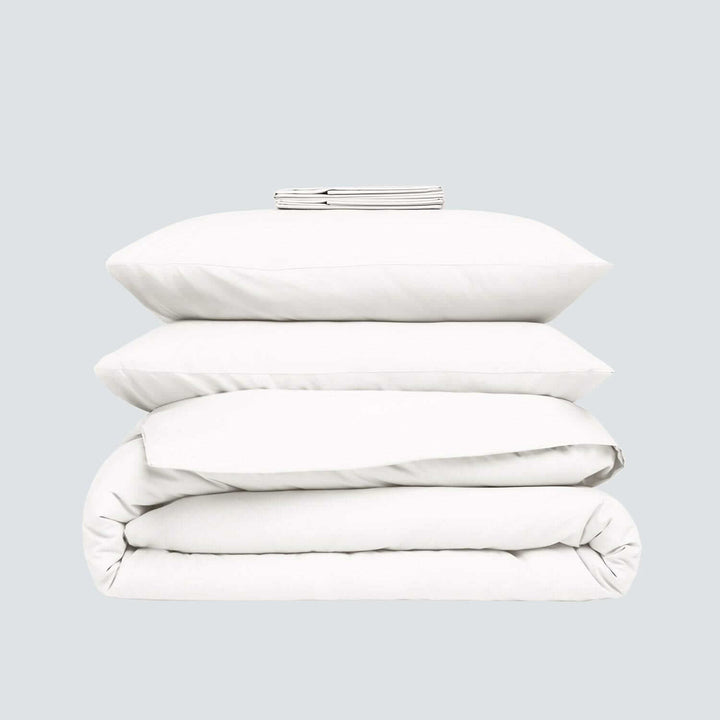
Sustainable & Regenerative Bedding Bundle | No More Night Sweats, Just Deeper Sleep
$598.40
$748.00
Cooler Nights & Deeper Sleep — Every Night Elevate your sleep with the only sustainable bundle crafted from regenerative New Zealand wool and organic cotton for true all-season comfort. These breathable, eco-friendly fibers naturally wick away heat and moisture to… Read more
If you sleep hot in a humid environment, the material you choose matters more than thread count or “cooling” claims. The table below compares common bedding materials to show which perform best as cooling support layers for hot sleepers, especially in warm, moisture-heavy climates.
| Material | Performs Well in Humidity? | Why |
|---|---|---|
| Percale cotton sheets | ✅ Yes | Breathable, releases heat quickly |
| Linen sheets | ✅ Yes | Loose weave allows airflow |
| Wool duvet inserts | ✅ Yes | Regulates moisture vapor |
| Bamboo / viscose | ⚠️ Mixed | Feels cool, traps moisture |
| Microfiber / synthetics | ❌ No | Retains heat and humidity |
The Coolest Bedding Materials Ranked for 2025
Not all natural fibers perform the same.
Some are cooling superstars; others are better as support layers.
Below is the definitive, science-backed ranking of cooler bedding materials—with real sleep performance explained in plain English.
1. Wool — The Most Effective Cooling Fiber on Earth
Do Wool Duvets Help With Temperature Regulation?
Yes — wool duvets help with temperature regulation because wool fibers absorb and release moisture vapor before it turns into heat. This allows the body to cool naturally overnight, rather than overheating as humidity builds up under synthetic bedding.
Most people still think wool = warm.
But lightweight wool is actually one of the coolest bedding materials in the world for one reason: moisture regulation.
Wool can absorb 30% of its weight in moisture vapor—the invisible humidity your body releases—without feeling wet. This prevents heat spikes, stops clamminess, and creates a balanced temperature all night.
Wool is the only natural fiber that:
pulls moisture away from your skin instantly
releases it back into the air as vapor
prevents overheating before it starts
adapts to your temperature moment-by-moment
That’s cooler bedding in its purest form.
If you live somewhere humid—or if you’re a hot sleeper who wakes up damp—wool often outperforms every other “cooling” material.
For naturally breathable comfort and balanced temperature regulation, explore our Organic Wool Comforter Collection — an effective option for sleepers seeking cooler bedding without synthetics.
2. Linen — Best for Hot, Humid, Tropical, and Sweaty Sleepers
Linen is woven from long, hollow flax fibers that naturally breathe and wick moisture. It stays cool even in sticky climates where cotton starts to feel heavy.
It’s:
super airy
durable
moisture-wicking
naturally antibacterial
less clingy than cotton
And here’s the part most people don’t realize:
Linen becomes softer, cooler, and more breathable each time you wash it.
It’s also one of the best sheet materials for night sweats, especially in warm or humid places.
If you prefer crisp, breezy bedding with that “coastal summer house” feel, linen is your perfect cooler bedding option.
3. Cotton Percale — The Reliable Cooling Classic
Cotton percale is the sheet fabric most people mean when they say “cool sheets.”
Percale has:
a matte feel
a breathable open weave
a crisp, hotel-like texture
excellent airflow
But here’s a crucial detail:
Percale sleeps cooler, sateen sleeps warmer.
If you’re shopping for cooler bedding, avoid sateen entirely.
If you want the best value-for-money cooling sheet, percale is still unmatched.
Regenerative Organic Cotton Sheet Set – Soft, Breathable & Sustainable

$189.00
Softer Sheets. Cleaner Sleep. Our organic cotton sheet set are simply better for the earth, and for your sleep. Grown on low-impact regenerative farms that actively heal the soil, our cotton is then woven and finished responsibly. This process eliminates… Read more
4. Bamboo / Rayon — Better Than Polyester, Worse Than Linen
Most “bamboo cooling sheets” are actually rayon—chemically processed fibers that feel silky but trap humidity over time.
Rayon breathes better than polyester, but it:
holds moisture
pills quickly
feels warm in humid climates
loses its “cool” once you heat it up
So while it’s not terrible, it’s not top-tier cooling.
And speaking of “not top-tier”—let’s talk about what to avoid at all costs.
5. The Bedding Materials That Always Sleep Hot
Avoid these if you're trying to cool down:
microfiber
polyester
down alternative
gel-infused comforters
“cooling blends” (marketing term)
anything coated or chemically “cool-to-touch”
They feel icy when you touch them in the store.
But once your body heats them?
They trap everything—heat, humidity, and sweat.
If chemical residues or fabric finishes are part of your sensitivity concerns, our Non-Toxic Bedding Collection includes options made without harsh treatments — keeping your sleep environment both cool and clean.
Now let’s talk about what an actual cooler sleep setup looks like in real life.
Organic Wool Duvet Insert & Bedding Set | Sustainable & Regenerative | Made in New Zealand

$475.15
$559.00
Cooler Nights & Deeper Sleep — All Year Long Looking for the perfect organic wool duvet insert and wool bedding set? This complete bundle includes both the duvet insert and cover. (The insert uses the same breathable, temperature-regulating design as… Read more
What Cooler Bedding Looks Like (A Complete Setup)
A cooler bed is a system, not a single product.
Everything works together to manage your temperature.
Sheets:
Cotton percale or linen.
Comforter:
Lightweight, breathable wool.
Duvet Cover:
100% cotton or linen—never microfiber.
Pillows:
Avoid polyester fill; go for natural alternatives.
Mattress Layer:
Skip foam toppers that trap heat.
Once you understand the system, choosing cooler bedding becomes incredibly easy.
What Makes a True All-Season Duvet Insert
A true all-season duvet insert adapts to temperature changes by regulating moisture and airflow — not by adding or removing fill. This is why breathable, moisture-responsive materials perform better year-round than seasonal synthetic inserts.
Cooler Bedding vs “Cooling Bedding”: The Big Difference
Most brands sell “cooling bedding”—but very few sell cooler bedding.
Cooling bedding = a claim
Cooler bedding = an outcome
Cooling bedding is usually:
polyester
coated
gel-infused
blended with synthetics
cool-to-touch only
Cooler bedding is:
natural
breathable
moisture-regulating
temperature-rebalancing
stable all night
If you’re shopping online and confused by all the claims, this next section helps you cut straight through the noise.
How to Choose Coolest Bedding (2025 Buying Guide)
Here’s your simplified checklist:
✔ Choose natural fibers only
Cotton percale, linen, wool.
✔ Look at the weave, not the thread count
Percale < sateen for coolness.
✔ Think about humidity
Hot + dry → cotton percale
Hot + humid → linen
Night sweats → wool comforter + percale sheets
✔ Avoid synthetics everywhere you can
One wrong synthetic layer will ruin the whole system.
✔ Remember the “whole bed” rule
Your sheet + comforter + duvet cover work together.
And when it comes to the center of your sleep microclimate—the comforter—nothing performs like wool.
Why Wool Makes the Most Effective Cool Bedding
At Antipodean Home, our regenerative wool comforter is engineered for people who run hot.
It cools because wool fibers:
absorb humidity instantly
prevent sweat before it happens
keep your temperature consistent
breathe better than polyester or down
Synthetic comforters trap heat.
Bamboo comforters collapse over time.
Down is warm, but it doesn’t breathe.
Wool is the only fill that works with your body instead of fighting it.
Explore Our Bedding for Hot Sleepers Collection
FAQs on Wool Duvet Inserts, Comforters & Sustainable Bedding
What type of bedding keeps you the coolest at night?
The coolest bedding is always made from natural fibers—specifically linen, cotton percale, and a lightweight wool comforter. These materials breathe, regulate temperature, and release moisture vapor before it turns into sweat. Synthetic “cooling” bedding often feels cold at first touch but traps heat once you’ve been lying on it for a few hours.
If your goal is long-lasting comfort, not five seconds of icy fabric, natural cooling bedding always wins.
Is linen or cotton better for cooler bedding?
Both are excellent, but they shine in different ways.
Linen sleeps cooler in humid climates because it’s incredibly airy and wicks moisture fast.
Cotton percale is better for hot-but-dry environments and gives that crisp, hotel-like coolness.
If you live somewhere warm and sticky, choose linen.
If you prefer a classic cool sheet that stays breathable, go percale.
Do wool comforters really help hot sleepers stay cool?
Yes—much more than people expect.
A wool comforter is one of the best tools for cooler bedding because wool regulates humidity, not just heat. It absorbs up to 30% of its weight in moisture vapor, preventing that sweaty microclimate that wakes you up at 2 a.m. Wool balances your temperature naturally and keeps your sleep environment dry, which is the real key to cooling.
What bedding should I avoid if I sleep hot?
Avoid anything synthetic:
microfiber
polyester
down alternative
gel-infused comforters
“cooling blends”
performance fabrics
sateen sheets (too dense, traps heat)
These materials trap humidity, hold body heat, and make it harder for your skin to breathe. Even products marketed as “cooling” often rely on coatings that feel cool at first but warm up quickly and stay warm.
What is the ideal cooler bedding setup for night sweats?
A balanced natural-fiber setup is the most effective:
Linen or cotton percale sheets (airflow layer)
Lightweight wool comforter (humidity regulation + temperature balance)
Cotton or linen duvet cover (no synthetics that trap moisture)
This combo tackles the real cause of overheating: trapped moisture.
When the humidity around your body stays low, your temperature stays stable—and you sleep significantly cooler.
How does cooler bedding actually work, and why are natural fibers better than “cooling technology”?
Cooler bedding works by controlling three things simultaneously: airflow, humidity, and temperature. Most people assume overheating is caused by heat alone, but the real culprit is humidity trapped close to the skin. As your body warms your sleep space, moisture vapor accumulates. If your bedding can’t release that moisture, your temperature spikes and your sleep becomes restless.
This is why natural cooling bedding—made from materials like linen, cotton percale, and New Zealand wool—performs far better than synthetic “cooling” products. Natural fibers have microscopic pores that allow heat to escape and moisture to move away from your body before you feel sweaty. Wool is especially effective because it can absorb up to 30% of its weight in vapor, preventing the muggy buildup that wakes hot sleepers.
By contrast, synthetic comforters, microfiber sheets, bamboo rayon, and gel-infused “cooling” bedding create the opposite effect. They feel cool for a few seconds but trap heat and moisture throughout the night, which makes them some of the least effective options for staying cool.
The coolest bedding setup—proven repeatedly across hot-sleeper research—includes:
linen or cotton percale sheets for breathability,
a lightweight wool comforter for humidity control, and
a cotton or linen duvet cover to maintain airflow.
This combination regulates your sleep microclimate, helping hot sleepers stay cool, balanced, and dry through the entire night. For anyone dealing with night sweats, overheating, or humidity-based discomfort, natural fibers are the only materials that actually deliver cooler, deeper sleep.