

If you're searching for the best comforter for hot sleepers, or the best duvet insert for hot sleepers, you probably don't want something that just feels cool for a few minutes.
You want something that actually works all night.
Waking up overheated, damp, or throwing the covers off at 3 a.m. isn't caused by warmth alone.
It's caused by trapped humidity.
Most "cooling" comforters focus on surface temperature.
The comforters that actually work for hot sleepers manage heat and moisture continuously. Learn how humidity affects sleep quality and why moisture matters more than temperature. For a deeper understanding of the trapped moisture problem, read our comprehensive guide on sleeping damp.
How we ranked the options: This is a material-and-construction comparison, not a laboratory product test. We evaluated comforter categories using five buying criteria that matter to hot sleepers: fill weight, airflow, moisture management, shell fabric, and care requirements. We also note the trade-offs of each material so you can choose for your climate, budget, and washing preferences.
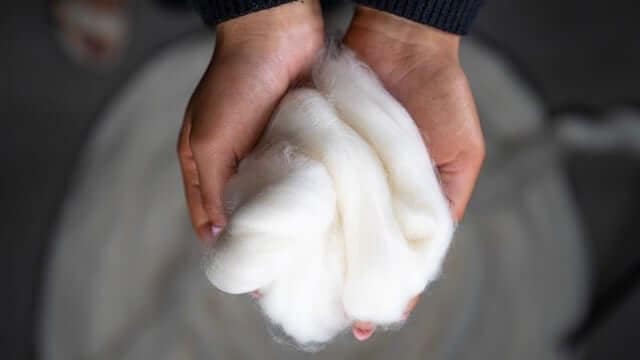
Quick answer: The best comforter for a hot sleeper is not simply the thinnest or coldest-feeling option. Start with the problem you actually have: too much insulation, trapped humidity, a tight shell, or a comforter that feels cool at first but turns damp later. For many hot sleepers, a breathable wool comforter is a strong starting point because wool can buffer moisture vapor while still providing stable, all-season insulation.
Best Comforter for Hot Sleepers (Quick Verdict)
If you:
wake up sweaty or clammy
overheat in waves overnight
feel hot even in a cool room
struggle with night sweats
The best comforter for hot sleepers regulates humidity, not just surface chill.
If you want the short answer: Hot sleepers need a breathable, temperature-regulating comforter designed to move moisture vapor before the bedding microclimate turns damp and clammy.
Before you choose: Understanding the science behind bedding materials helps you avoid expensive mistakes. Learn why some materials work for hot sleepers and others fail.
Best Cooling Comforters for Night Sweats: What's Different
Night sweats are a different problem than simply sleeping hot. If you're waking up drenched, soaked through the cover and into your sheets, your comforter needs to do more than feel cool to the touch. It needs to manage sustained moisture over 6-8 hours of sleep.
Most comforters fail at this, which is why reaching for a "cooling" label often makes night sweats worse, not better.
Here's what actually works: a comforter that absorbs moisture, releases it into the air around you, and keeps doing both through the night. Wool is a strong material for this job because it can absorb moisture while staying dry to the touch. But understanding the difference between night sweats and general overheating will help you choose the right comforter for your specific situation.
Understanding Night Sweats vs. General Overheating
Most bedding advice conflates these two problems, but they're not the same thing.
General overheating happens when your sleep environment traps heat faster than your body can shed it. You wake up warm. You throw off the covers. You cool down. It's a rhythm problem: too much insulation for the moment.
Night sweats are something else entirely. Your body may be producing moisture continuously, often for hormonal, medical, medication-related, or environmental reasons, and your bedding may not be managing that moisture fast enough. You don't just feel warm; you feel damp. You may wake up soaked or soak through pajamas. Even with the covers off, trapped moisture can keep you clammy against your skin.
The distinction matters because it changes what you need from a comforter. A cooling gel-infused comforter might help someone who's simply warm. But for night sweats, that surface-cooling effect may not manage moisture over a full night. A high-thread-count cotton sheet set might breathe initially, but once it absorbs sweat, it can cling and hold moisture close to the body.
For night sweats, you need a comforter that prioritizes moisture management, not just airflow. Bedding cannot treat the underlying cause of night sweats, but the right layers can reduce trapped heat and clamminess.
Night-Sweat-Specific Comforter Criteria
When you're choosing a comforter for night sweats, five factors predict how well it will actually work:
- Moisture capacity. How much moisture can the fiber absorb without feeling wet? Hygroscopicity is the technical term; wool's is high compared with many common bedding fills.
- Sustained breathability. Does the comforter stay breathable over 8+ hours as it absorbs moisture? Or does it get overwhelmed and start trapping heat?
- Weight distribution. Is it heavy enough to feel secure, but not so heavy that it traps humidity under its own weight?
- Construction type. Are the fibers arranged to allow moisture vapor to escape, or is the fill dense enough to restrict airflow?
- Fill material behavior under sustained humidity. Does the material maintain its insulating and comfort properties as it absorbs moisture? Or does it lose loft, clump, or hold dampness?
Many popular "cooling" comforters fail on several of these criteria. That's why a cool first touch does not always translate into a dry, stable night.
Comparison Table: Night-Sweat Comforter Contenders
| Comforter Material | Moisture management | Sustained breathability | Weight | Construction | Best For | Rating |
|---|---|---|---|---|---|---|
| Wool (merino/alpine) | Excellent moisture buffering | Excellent when loft and shell allow airflow | Light-medium | Lofted structure | Hot sleepers, damp beds, hormonal heat shifts | Best fit |
| Organic Cotton | Good absorption | Good when light and woven for airflow | Light | Percale or lighter constructions preferred | Mild sweating, dry climate, budget option | Strong fit |
| Linen | Good absorption and quick drying | Very good airflow | Light | Loose weave | Dry climate, mild sweating, summer use | Strong fit |
| Bamboo/Viscose | Moderate; depends on blend and weave | Varies by shell and construction | Light | Often tight weave | Initial softness and cool feel | Situational fit |
| Down Alternative | Usually limited moisture buffering | Varies; dense batting can restrict airflow | Varies | Often dense fill | Budget and washability priorities | Check carefully |
| Down | Limited moisture buffering | Can lose comfort when moisture accumulates | Medium | Lofty insulation | Cooler rooms and low-weight options | Check carefully |
Table criteria: Assessed for hot-sleeper and night-sweat comfort over 6-8 hours of moisture exposure. "Sustained breathability" means the comforter continues functioning after absorbing moisture, not that it feels cool initially.
Why Wool Wins for Night Sweats
Wool has two advantages for night sweats, and they work together.
First: It absorbs moisture without feeling wet. Wool fibers can hold moisture within the fiber structure rather than only on the surface. This matters at 2 a.m. when a comforter has been exposed to moisture for several hours; you need it to keep the bed feeling drier, not heavy and clammy.
Second: It releases that moisture into the air. Wool doesn't hold onto moisture permanently. As the humidity around you decreases, the wool can release the moisture it absorbed. This creates a cycle: absorb moisture, release moisture, stay drier, repeat.
The research backs the mechanism. Sleep thermal-environment research shows that bedding, room temperature, humidity, and the body interact as one system. A 2026 British Wool, IWTO, and Bangor University bedding report also found that wool-filled duvets transmitted moisture faster than several comparable down, feather-and-down, and synthetic fills in their test conditions.
Wool vs. Synthetic: The Moisture Battle
| Material | Moisture Buffering | Night-time Feel | Long-term Result |
|---|---|---|---|
| Regenerative Wool | High (absorbs & releases) | Dry and balanced | Stable sleep environment |
| Synthetic Fill | Low (traps vapor) | Clammy or "sticky" | Overheating / Heat spikes |
When to Consider Alternatives
Wool works for many night-sweat sufferers, but there are legitimate reasons to explore other options.
If you are sensitive to wool: Some reactions blamed on wool may involve lanolin, coarse fibers, finishing, or personal sensitivity. If you have had a reaction, evaluate carefully and consider a breathable alternative. Organic cotton percale can be a useful alternative because it will not manage moisture as well as wool, but a percale weave with good airflow can work if you also use breathable sleepwear and keep the room well ventilated.
If you live in a very dry climate: Linen can be a strong option in desert-like conditions with low ambient humidity and mild nighttime moisture because it dries quickly and has a naturally airy hand feel.
If budget is the limiting factor: A quality organic cotton percale comforter or breathable cotton layer can cost less than wool and work reasonably well if your night sweats are mild and your sleep environment is already cool and well ventilated.
What not to do: Don't buy a cooling gel comforter, a down-alternative "breathable" comforter, or a high-thread-count cotton sateen expecting surface coolness alone to solve a moisture problem. These products can feel cool initially, then become uncomfortable when humidity builds.
Best Duvet Insert for Hot Sleepers (Comforter vs Duvet Explained)
Many shoppers search for the best duvet for hot sleepers or the best duvet insert for hot sleepers.
In most cases, "duvet insert" and "comforter" are functionally the same: the difference is the outer cover. What matters is the insulation inside. If the fill traps heat and humidity, sweating follows. If the fill allows moisture vapor to move, the sleep environment stabilizes.
Why Hot Sleepers Overheat Under a Comforter
Your body cools itself by releasing heat as moisture vapor.
If vapor escapes, you stay balanced. If vapor gets trapped, humidity rises under the covers. And when humidity rises, evaporative cooling slows down. That can lead to clamminess, heat spikes, restless sleep, and early-morning wake-ups.
The issue isn't always that your comforter is "too warm." It may be that it doesn't allow vapor to move through the fill. For the complete mechanism and solution, see our guide on why you're sleeping damp.
Why Some Comforters Trap Heat and Make You Sweat
A comforter can feel hot for several reasons: too much fill for the room temperature, a tightly woven shell, limited airflow through the construction, or moisture accumulating faster than the bedding can disperse it.
Fiber name alone does not determine performance. A lightweight, loosely constructed comforter may sleep differently from a heavy version made from the same material. Shell fabric, fill weight, quilting pattern, room humidity, and the sleeper's own heat output all matter.
Practical check: If you become comfortable after removing only the comforter, start by comparing fill weight and construction. If the whole bed feels damp or clammy, also review the sheets, mattress protector, and room humidity.
Why Some Cooling Comforters Lose Their Effect Overnight
Cooling products use different strategies. Phase-change materials can temporarily absorb and release heat within a designed temperature range, while gel finishes and cool-touch fabrics mainly affect the initial surface sensation.
Those features may help some sleepers, but they do not replace the basics: appropriate fill weight, airflow, moisture movement, and a shell suited to the climate. A comforter that feels cool at bedtime can still become uncomfortable if it is too insulating for the room or if humidity builds within the bed.
When comparing a cooling claim, check what is actually being cooled, how the effect is tested, and whether the manufacturer also discloses fill weight, shell material, care requirements, and intended season.
For more context, see why modern bedding became more complicated than it needs to be.
Why Breathable Comforters Work When Cooling Ones Fail
Cooling products try to lower temperature after heat builds. Breathable comforters help reduce heat and humidity buildup instead of relying only on a cold-touch surface. That's the difference between temporary relief and stable sleep.
For hot sleepers, the goal isn't to feel cooler at the start; it's to stay balanced through the night.
Is a Lightweight Comforter Better for Hot Sleepers?
Not necessarily. Lightweight doesn't equal breathable. Many lightweight comforters still trap vapor. Hot sleepers don't simply need less insulation. They need continuous airflow, vapor permeability through the fill, and stable humidity control overnight.
Weight is not the enemy. Humidity is.
How Common Comforter Materials Differ
No fill is automatically right or wrong for every hot sleeper. Construction, weight, shell fabric, climate, care, allergies, and preferred feel can matter as much as the fiber itself.
- Wool: manages moisture vapor well and can provide balanced insulation, but quality, weight, care instructions, and price vary.
- Cotton: familiar, washable, and breathable in lighter constructions; heavier cotton fill can retain absorbed moisture and take longer to dry.
- Silk: lightweight and low bulk, though usually more expensive and often subject to specialist care.
- Down: highly efficient insulation at low weight. Hot sleepers should compare fill weight, loft, shell weave, and seasonal rating rather than assuming every down comforter performs alike.
- Lyocell and viscose-based fills: often soft and lightweight, with performance depending heavily on blend, batting, shell, and construction.
- Polyester and down alternative: affordable and commonly washable. Breathability varies by batting density, shell, and quilting, so material labels alone are not enough to predict comfort.
Best Comforter Materials for Hot Sleepers: A Practical Comparison
| Material | Potential advantages | Trade-offs to check | Often suits |
|---|---|---|---|
| Wool | Moisture buffering, balanced insulation, natural fill | Price, weight, specialist care on some products | Sleepers who alternate between warm and clammy |
| Cotton | Familiar feel, washable options, good airflow in light builds | Can feel damp when heavily saturated; bulky versions may run warm | Warm, relatively dry rooms and easy-care priorities |
| Silk | Low bulk and lightweight warmth | Cost and delicate care | Sleepers wanting a light, draping comforter |
| Down | Excellent warmth-to-weight ratio and loft | May be too insulating at higher fill weights; allergy and care considerations | Cooler rooms when a low-weight option is selected |
| Lyocell/viscose blends | Soft hand feel and lightweight options | Performance varies widely by blend and construction | Sleepers prioritizing softness and lower bulk |
| Polyester/down alternative | Affordable, accessible, frequently machine washable | Dense batting and tight shells can limit airflow; longevity varies | Budget and easy-care shoppers who choose a light construction |
Our recommendation
For many hot sleepers, a lightweight wool comforter is a strong starting point because wool can absorb and release moisture vapor while providing insulation. It is not the only workable choice: a light cotton, silk, lyocell, or carefully specified down comforter may be better for a particular climate, budget, feel, or care routine.
Whatever the fill, compare the total construction. Look for disclosed fill weight, a breathable shell, quilting that prevents dense cold or hot spots, realistic care instructions, and a return policy that allows you to test the comforter in your own room.
How Antipodean Compares to Other 2026 Cooling Comforters
The cooling-comforter category got more crowded in 2026. Here's how three widely searched options compare against the Organic Wool Comforter on the criteria that matter most to hot sleepers: fill, moisture approach, and care.
| Comforter | Fill | Moisture approach | Care |
|---|---|---|---|
| Antipodean Organic Wool Comforter | Regenerative New Zealand wool, Airlay™ construction | Absorbs and releases moisture vapor continuously | Spot clean / specialist wash |
| Coop Sleep Goods Cool+ Adjustable Comforter | Adjustable down-alternative fill with Cool+ fabric | Cool-to-touch shell fabric plus airflow-focused fill | Machine washable |
| Cozy Earth Bamboo Viscose Comforter | Bamboo viscose fill and shell | Moisture-wicking fiber and breathable construction claims | Machine washable |
| Nest Bedding Washable Wool Comforter | 100% wool encased in organic cotton | Wool-based moisture mechanism in a machine-washable build | Machine washable, tumble dry low |
Wool vs Down Comforter for Hot Sleepers (Quick Comparison)
Down insulates extremely well, but it traps warm air and limits moisture release, which can lead to overheating for hot sleepers. Wool behaves differently. It absorbs and releases moisture vapor, helping maintain a dry and balanced sleep environment throughout the night.
For hot sleepers, the difference isn't just warmth; it's whether humidity is allowed to escape.
This isn't just a marketing claim. A January 2026 study conducted by British Wool, the International Wool Textile Organisation (IWTO), and Bangor University's BioComposites Centre tested full-sized duvets of comparable warmth filled with wool, down, feather-and-down, and synthetic fiber. Wool held the least moisture of the four fills and, at body-heat-simulating temperatures, transmitted moisture faster than synthetic and feather-and-down fills in those test conditions.
Hot-Sleeper Comforter Selector
| Sleeper problem | What to check first | Better comforter direction | Antipodean connection |
|---|---|---|---|
| Hot at bedtime and all night | Fill weight and seasonal rating | Lower insulation, breathable shell, lighter layering | 350 GSM all-season wool fill should be evaluated against room temperature and season. |
| Cool at bedtime, damp by 2-3 a.m. | Moisture vapor movement and shell breathability | Wool or another fill/shell combination that moves moisture, not just a cold-touch finish | Wool fill plus cotton shell supports the moisture-first thesis. |
| Throws covers off repeatedly | Fill density, loft, and airflow | Avoid dense batting or tight shells that trap humidity | Airlay construction belongs here as the construction differentiator. |
| Sleeps with a partner at a different temperature | Balanced insulation and moisture buffering | Avoid extreme-cooling or extreme-warmth products | Wool's value is stability, not a one-sided cooling blast. |
| True soaking night sweats | Medical boundary plus bedding comfort | Seek medical guidance when indicated; choose layers that reduce clamminess | Link to the menopause/night-sweats bedding guide. |
How to Choose a Breathable Comforter for Hot Sleepers
Use this:
- Wake up sweaty or damp: prioritize vapor regulation
- Feel cool at bedtime but overheat later: avoid surface-cooling synthetics
- If you also experience night sweats or hot flashes: separate medical causes from bedding comfort, then choose layers that reduce trapped heat and clamminess
- Want cooling without gels: choose natural breathability and disclosed construction over a surface finish alone
If overheating is disrupting your sleep, the solution isn't colder bedding. It's better regulation.
Best Comforter for Hot Sleepers in Summer
Summer adds a second layer of heat: warmer bedrooms leave a comforter less room to buffer moisture before humidity builds under the covers.
- Drop fill weight, not breathability. A lightweight wool duvet still manages moisture vapor; a lightweight synthetic may reduce insulation without solving the underlying humidity problem.
- Pair with breathable sheets. Linen or crisp percale under a moisture-managing comforter outperforms any single "cooling" product used alone.
- Room temperature still does much of the work. Even the best moisture-managing fill works harder than it needs to in a warm room; a fan or AC airflow helps any comforter perform closer to its potential.
The buying criteria don't change for summer: fill weight, airflow, moisture management, shell fabric, and care still matter most. Just choose the lighter end of your preferred fill's weight range.
Who This Comforter Is For (Hot Sleepers, Night Sweats & Overheating)
This guide is for:
- Hot sleepers waking up damp
- People whose bedding feels clammy during the night
- New mothers dealing with postpartum night sweats
- Sleepers in humid climates
- Anyone frustrated with "cooling" comforters that fade overnight
It's not for:
- People who sleep cold
- Those wanting heavy insulation
- Anyone seeking synthetic cooling gels
Clarity reduces frustration. Not every sleeper has the same problem.
Global Performance: Climate-Specific Guidance
Whether you are in the high humidity of Japan, the arid heat of Israel, or the variable seasons of Lithuania, the goal is the same: moisture vapor movement.
- Humid Climates (e.g., Japan): Wool's ability to buffer moisture prevents the "sticky" feeling when ambient humidity is high.
- Arid Heat (e.g., Israel): Breathable shells like organic cotton percale are critical to prevent overheating while the fill manages internal body heat.
- Variable Seasons (e.g., Lithuania): A balanced wool fill provides stable insulation that doesn't trap moisture during sudden temperature shifts.
Best Comforter for Hot Sleepers
If you want a comforter built specifically for airflow and humidity regulation, this is the one designed for that purpose:
Organic Wool Comforter – All-Season Merino Duvet Insert

$342.00
A wool comforter made for hot sleepers who want a natural way to sleep cooler. Ordinary comforters can trap heat and moisture, leaving your bed hot and damp. This organic wool comforter uses breathable, spun New Zealand merino wool to… Explore Our Wool Comforters
• Regulates temperature continuously
• Moves moisture vapor before bedding feels damp and clammy
• Designed for hot sleepers who want a drier, more breathable comforter
• Breathable Airlay™ construction increases airflow through the fill
• Made from regenerative New Zealand wool
Final Verdict: Best Comforter for Hot Sleepers
The best comforter for hot sleepers isn't the coldest one. It's the one that keeps your sleep environment dry, breathable, and stable all night.
Surface cooling fades. Humidity control determines whether you sleep through or wake up overheated. If you're ready for a comforter that works beyond the first 20 minutes, start with one built for vapor regulation, not cooling tricks.
For hot sleepers whose main problem is overheating, clamminess, or humidity buildup, a breathable wool comforter is a strong long-term starting point.
How the Rest of Your Bedding Affects a Hot Sleeper
Your comforter is the largest insulating layer, but sheets and duvet covers also affect airflow and moisture. Linen and crisp organic-cotton percale can complement a breathable wool comforter; tightly woven synthetics can reduce the benefit by holding humidity closer to the body.
For the comforter itself, prioritize moisture-vapor movement rather than a temporary cool-to-the-touch finish. Wool can absorb moisture within the fiber and release it as conditions change, helping the bed remain more balanced through the night.
Sources and Methodology
This guide is a material-and-construction buying framework, not a laboratory ranking of every comforter on the market. It uses Antipodean product specifications for the Organic Wool Comforter and evaluates comforter categories by fill, fill weight, shell fabric, construction, moisture movement, care, and seasonality. Thermal-comfort guidance is checked against HSE's six-factor framework and sleep thermal-environment research. Wool moisture-performance discussion is checked against the IWTO/British Wool/Bangor University bedding report. Night-sweats language is bounded by NHS guidance: bedding can make a sleeper too hot or clammy, but regular soaking night sweats should be discussed with a qualified healthcare professional.