

What Is the Best Bedding Material for Hot Sleepers? Breathable, Cooling Materials Explained
Choosing the right bedding material is one of the biggest factors in how hot — or how comfortably — you sleep.
But most advice focuses on surface “cooling,” not what actually matters: how materials handle heat and moisture over time.
This guide breaks down which bedding materials perform best for hot sleepers — and why.
Synthetic fabrics, dense weaves, and plush fillings trap heat and humidity, forcing your body to fight its natural temperature-regulation process all night long.
Cooling sleep isn’t about thread count, brand names, or “cool-touch” marketing.
It’s about material science — specifically, how fibers handle breathability, moisture vapor, and temperature regulation over time.
The comparisons below are based on two measurable properties — air permeability and moisture vapor transmission rate — which together determine how a material performs overnight rather than just on first contact; for a full explanation of how these properties work, see how breathability and moisture vapor transfer actually work in bedding.
🔹 TL;DR for Hot Sleepers
Cooling sleep depends less on surface temperature and more on how well your bedding releases heat and moisture over time.
Materials like wool, linen, and organic cotton tend to perform better because they allow airflow while preventing humidity from building overnight.
Why Heat and Moisture Both Matter for Hot Sleepers.
The material you choose in your comfort layer has the biggest impact on how your sleep environment behaves overnight.
Fibers that manage both heat and moisture — not just airflow — create a more stable, drier sleep surface, which is why they consistently perform better for hot sleepers.
What Are the Most Breathable Bedding Materials for Hot Sleepers?
The most breathable bedding materials are those that allow both air and moisture vapor to move freely. Wool, linen, and organic cotton consistently rank highest because they prevent heat and humidity from building during sleep.
If sweating is the main issue, focus specifically on the best bedding for night sweats, where moisture control matters more than surface cooling.
How to Choose the Best Bedding Material for Hot Sleepers
When evaluating any bedding material, these are the factors worth comparing:
| Factor | What It Measures |
|---|---|
| Breathability | Airflow through fibers |
| Moisture Management | Sweat evaporation & vapor release |
| Thermal Regulation | Temperature stability overnight |
| Sustainability | Environmental impact |
| Comfort & Longevity | Real-world performance |
How to Compare Bedding Materials for Hot Sleepers (Breathability & Moisture Control)
Not all bedding materials handle heat and moisture the same way. Understanding how each one behaves overnight helps you evaluate which will actually work for your sleep profile.
| Material | Breathability | Moisture Management | Overnight Stability | Best For |
|---|---|---|---|---|
| Wool | High | Excellent — moves moisture as vapor | Stable, dry surface all night | Hot sleepers, night sweats |
| Linen | Very high | Good — strong airflow, less moisture buffering than wool | Consistent, slightly variable | Warm sleepers, humid climates |
| Organic cotton | Moderate–high | Reliable — absorbs moisture, slower to release | Good initial, improves with layering | General use, sensitive skin |
| Bamboo viscose | High (surface) | Weak — moisture builds rather than releases | Inconsistent overnight | Surface cooling only |
| Down | Low | Poor — traps humidity | Tends to overheat | Cold sleepers only |
| Synthetics | Low | Poor — minimal vapor transfer | Consistently warm and damp | Not recommended for hot sleepers |
What this table shows: breathability and moisture management are related but different properties. A material can feel cool at the surface — bamboo is the clearest example — while failing to release accumulated humidity over the course of the night. For hot sleepers, overnight moisture management tends to matter more than initial surface temperature.
The tradeoffs between these materials become more relevant when you're choosing a specific product — particularly a comforter, where the fill material has the largest impact on how your sleep environment behaves after the first hour.
👉 See how these materials translate into real comforter performance in our breakdown of the best comforters for hot sleepers.
Bottom line: Cooling sleep isn’t about feeling cold.
It’s about staying dry. Materials that actively manage moisture tend to perform best — especially for hot sleepers and night sweats.
What Bedding Materials Are Best for Night Sweats?
Night sweats aren’t just about heat — they’re driven by moisture that builds and gets trapped in your sleep environment.
Materials that can absorb and release humidity continuously tend to perform best, because they prevent that damp, overheated feeling from developing in the first place.
But not all bedding handles this the same way.
👉 See how different materials compare in our breakdown of breathable bedding for night sweats.
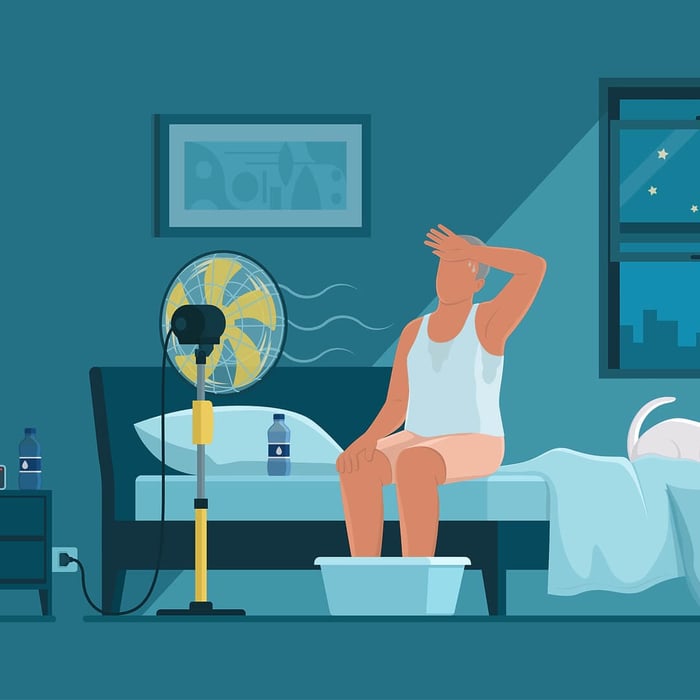
Why You Wake Up Hot at Night (Sleep Temperature & Moisture Explained)
Your body naturally cools before and during sleep. Core temperature drops about 1–2°F, helping you enter deep sleep.
When bedding traps heat and humidity, that cooling process breaks down — leading to:
Night sweats
Tossing and turning
Shallow, fragmented sleep
Three factors determine whether bedding actually feels “cool” overnight:
Air permeability — can heat escape?
Moisture vapor transport — can sweat evaporate?
Thermal balance — does warmth stay steady without spikes?
The goal isn’t cold fabric.
The goal is a stable, dry microclimate.
The Wool Paradox: Why Wool Is Cooler Than Cotton
This is the moment most hot sleepers realize why nothing else worked.
Cotton absorbs sweat and stays wet
Wet fabric traps heat
Trapped heat causes more sweating
Wool behaves differently.
Wool moves moisture as vapor, not liquid.
It can absorb up to 30% of its weight in moisture without feeling damp, releasing it into the air before sweat accumulates.
Dry sleep = cooler sleep.
That’s why wool often feels cooler than cotton — even in summer.
Bamboo vs Wool for Hot Sleepers (Which Material Actually Stays Cool?)
Many hot sleepers arrive here after trying bamboo.
Here’s why that happens — and why they still wake up hot.
| Feature | Bamboo Viscose | Wool |
|---|---|---|
| Cool to touch | ✅ Yes | Neutral |
| Moisture vapor release | ❌ Weak | ✅ Excellent |
| Stays dry overnight | ❌ No | ✅ Yes |
| Night sweats | Often worsen | Often improve |
| Long-term cooling | Inconsistent | Stable |
Verdict: Bamboo cools your skin.
Wool cools your sleep environment.
How to Stay Cool at Night Naturally (Using the Right Bedding Materials)
Science is clear: sleep comfort depends on how well your bedding manages heat and moisture — not how cool it feels at the surface.
Materials that allow airflow while continuously releasing humidity create a drier, more stable sleep environment — which is why they consistently perform better for hot sleepers.
If you’re still waking up hot, it’s not your body.
It’s your bedding.
When your sleep stays dry, your nights stay cool — and your mornings get brighter.
Ready to Choose the Right Comforter?
Now that you understand which materials actually work for hot sleepers, the next step is choosing the right product.
👉 See our breakdown of the best comforter for hot sleepers
Frequently Asked Questions
What actually causes you to overheat at night?
Overheating during sleep is usually caused by trapped heat and moisture in the bedding environment — not just room temperature.
When humidity builds and can’t escape, your body’s natural cooling process is disrupted, leading to sweating and restless sleep.
Bedding that releases both heat and moisture helps prevent this cycle.
What’s the coolest bedding material scientifically?
The coolest bedding materials aren’t the ones that feel cold — they’re the ones that manage heat and moisture effectively.
Materials like wool, linen, and organic cotton allow air to circulate while continuously releasing humidity, which helps maintain a dry, stable sleep environment.
Surface “cooling” fabrics may feel cold at first, but often lose that effect as moisture builds overnight.
Are bamboo sheets good for hot sleepers?
Bamboo sheets can feel cool initially due to their smooth surface, but they tend to hold onto moisture rather than releasing it efficiently.
For hot sleepers, long-term comfort depends more on moisture management than surface cooling — which is where other natural fibers often perform more consistently.
How do I know if my bedding is breathable?
Breathable bedding allows both air and moisture vapor to move freely.
A simple sign: if your bedding feels damp, heavy, or warm during the night, it’s likely trapping humidity rather than releasing it.
True breathability shows up over time — not just in how the fabric feels when you first get into bed.
Is wool bedding itchy or heavy?
High-quality wool bedding is neither itchy nor heavy.
Modern wool fibers are fine, soft, and designed to sit beneath a fabric shell, so they don’t come into direct contact with your skin.
They’re also lighter than many synthetic or down alternatives while providing better temperature balance.
Can breathable bedding really stop night sweats?
Breathable bedding can significantly reduce the conditions that lead to night sweats by allowing heat and moisture to escape.
However, not all materials perform the same way — managing humidity is the key factor.
👉 For a deeper breakdown, see our guide to breathable bedding for night sweats
Does High Thread Count Make You Sleep Hotter?
Short answer:
Yes — very high thread count sheets often make hot sleepers sleep hotter, not cooler.
Here’s why.
Thread count measures how many threads are packed into a square inch of fabric — not how breathable that fabric is. When thread count gets very high (especially above ~400), those threads are packed so tightly that airflow is restricted. Less airflow means heat and moisture have nowhere to escape.
For hot sleepers, this creates a common pattern:
Sheets may feel smooth or cool at first
But as your body warms the bed, heat and humidity build up
Moisture gets trapped instead of released
You wake up feeling hot, clammy, or damp
This is why many people experience overheating even with “luxury” high-thread-count sheets.
What matters more than thread count?
Breathability.
Breathability is about how easily heat and moisture can move through your bedding — not how dense or heavy the fabric feels. Factors that affect breathability include:
Fiber type (natural vs synthetic)
Weave structure (how open or tight the fabric is)
Airflow and moisture vapor release
Sheets designed for breathability allow humidity to escape continuously through the night, which helps regulate temperature instead of trapping it.
Bottom line:
High thread count can feel luxurious, but for hot sleepers, airflow beats density. Cooling comfort depends on how well bedding releases heat and moisture — not how tightly it’s woven.