Eco-friendly bedding sounds simple.
Natural materials. Sustainable claims. Better for your home and the planet.
But in modern bedding, “eco-friendly” has become one of the most overused — and misunderstood — labels in the bedding industry.
Many products marketed as sustainable still rely on petroleum-based fibers, synthetic fills, chemical-heavy processing, or short-lifespan materials designed for replacement rather than longevity.
This guide breaks down what actually makes bedding environmentally friendly — from material sourcing and durability to natural fibers, breathability, and long-term environmental impact.

Eco-Friendly Bedding: The Quick Definition
Eco-friendly bedding is designed to reduce environmental impact while creating a healthier home environment.
In practice, that usually means:
- renewable or biodegradable materials
- reduced synthetic content
- lower chemical processing
- longer-lasting construction
- more responsible production systems
But not all “sustainable” bedding products are created equally.
Some focus primarily on marketing claims.
Others focus on creating durable, natural bedding systems designed to last longer and rely less on synthetic materials altogether.

What Makes Bedding Eco-Friendly?
Eco-friendly bedding is about more than a single certification or marketing claim.
The most sustainable bedding products typically combine:
- responsibly sourced natural fibers
- reduced chemical processing
- durable construction
- long product lifespan
- biodegradable or renewable materials
The materials used inside your bedding affect:
- environmental impact
- durability
- breathability
- chemical exposure
- long-term waste
Some bedding systems are designed to last.
Others rely heavily on synthetic processing and frequent replacement.
STRUGGLING WITH SLEEP TEMPERATURE?
Why Natural Fibers Matter in Sustainable Bedding
Natural fibers generally require less synthetic processing than petroleum-based materials.
Common eco-friendly bedding materials include:
- organic cotton
- wool
- linen
- hemp
These fibers are renewable, biodegradable, and naturally breathable.
Unlike many synthetic materials, they also break down more safely at the end of their lifespan.

SURFACE COOLING VS. THERMAL CONTROL
Why Many “Sustainable” Bedding Products Still Rely on Synthetics
Some bedding products marketed as eco-friendly still rely heavily on:
- recycled polyester
- synthetic cooling fabrics
- foam-based fills
- petroleum-derived fibers
While some of these materials reduce waste in certain contexts, they still depend on synthetic production systems and are often less breathable than natural fibers.
This is why material systems matter — not just surface-level eco claims.
Comparing “Natural” Cooling Materials
Eco-Friendly Comforters vs Synthetic Comforters
Traditional synthetic comforters are often made using petroleum-based fills designed for low-cost loft.
These materials can:
- compress more quickly over time
- retain humidity
- rely on chemical finishes
- contribute to short replacement cycles
Eco-friendly comforters made from natural fibers are typically more breathable, durable, and longer lasting.

Comparing Insulation for Hot Sleepers
What Makes a Comforter Truly Sustainable?
A sustainable comforter is not defined by a single eco claim.
The most environmentally friendly comforters typically combine:
- renewable natural materials
- durable fiber construction
- reduced synthetic content
- responsible production practices
- long-term performance
Longevity matters.
Bedding that lasts longer generally creates less waste over time.
TEMPERATURE IS A SYSTEM PROBLEM
Organic Bedding vs Eco-Friendly Bedding
Organic bedding and eco-friendly bedding are related — but they are not identical.
Organic bedding focuses primarily on how materials are grown and processed.
Eco-friendly bedding is broader.
It also considers:
- material longevity
- biodegradability
- synthetic content
- environmental impact over time
- durability and replacement cycles
This is why some products can technically be organic while still relying heavily on short-lifespan construction or synthetic components.
If you want to explore the difference between organic and regenerative bedding in more detail, our Organic vs Regenerative Bedding Guide explains how farming systems influence fiber quality, durability, and long-term material performance.

WHAT MOST GUIDES LEAVE OUT
Why Breathable Natural Fibers Matter
Breathable natural fibers often require fewer synthetic cooling technologies and chemical performance treatments.
This is one reason wool, linen, and cotton have remained important bedding materials for generations.
They create a more breathable sleep environment while relying less on synthetic engineering.

The Enemy in Your Bed
Why Wool Is One of the Most Effective Eco-Friendly Bedding Materials
Wool is:
- renewable
- biodegradable
- naturally durable
- resistant to odors and allergens
- capable of maintaining loft over long periods of use
It also naturally helps regulate heat and moisture without relying on synthetic cooling treatments.
When sourced responsibly, wool creates a durable and breathable bedding system designed to last significantly longer than many synthetic alternatives.
Certified Clean Materials
Why Earth-Friendly Bedding Starts With the Soil
Most eco-friendly bedding focuses on the end product — the fiber, the certification, or the finished material itself.
But truly earth-friendly bedding starts earlier, at the farming system.
Regenerative wool from ZQ-certified farms like Castle Ridge Station in Canterbury, New Zealand is designed to support healthier soil, increased biodiversity, and more resilient natural ecosystems — not simply reduce harm.
That difference matters.
Because healthier land produces stronger, longer-lasting natural fibers while supporting a more sustainable relationship between farming, materials, and the home.
This is the difference between bedding that is eco-friendly in marketing — and bedding designed around long-term environmental restoration.
Explore Our Eco Friendly Bedding
Choose the Organic Bedding System You Need
Browse the full Antipodean range: the standalone wool comforter insert, the comforter-and-duvet-cover set, the complete comforter-cover-and-sheets system, and organic cotton sheets.
This collection is the comparison and discovery route for the whole range. Each product page owns a different purchase: choose the standalone comforter when you only need the insert, the Comforter Set when you need the insert and cover, or the complete Bedding Set when you also need sheets.
If you are shopping because you sleep hot, wake up damp, prefer natural fibers, or want clearer certification scope, start with the table below.
Which organic bedding should you choose?
| If you are shopping for... | Start with... | Why it fits | Next guide |
|---|---|---|---|
| A comforter that sleeps warm without clamminess | Organic Wool Comforter | 350 GSM New Zealand merino wool fill, Airlay construction, and an organic cotton shell support breathable all-season insulation. | Fill weight and construction |
| A hot-sleeper comforter | Organic Wool Comforter | The issue is often trapped humidity, not just temperature. Wool helps buffer moisture vapor while insulating. | Best comforters for hot sleepers |
| Someone who wakes up feeling damp or clammy | Organic Wool Comforter plus breathable cotton layers | Wool manages insulation above you while breathable cotton keeps the sleep surface fresh and dry. | Why bedding can make you wake up damp |
| A complete natural-fiber bedding system | Comforter + Duvet Cover Set or Complete Organic Wool Bedding Set | Comforter and sheets are matched so insulation and breathability work together. | Wool and cotton pairing guide |
| Certification and provenance | ZQRX wool and GOTS cotton | ZQRX, GOTS, and OEKO-TEX cover different parts of the supply chain and should not be treated as interchangeable. | ZQRX wool certification |
| Night sweats or menopause overheating | Breathable bedding plus a medical boundary | Bedding can reduce heat and humidity buildup in the bed, but it does not treat the underlying cause of regular soaking night sweats. | Night sweats and bedding |
Organic Bedding for Healthier Sleep
Unlike synthetic-fill bedding that can hold heat and humidity close to the body, breathable wool and cotton bedding uses natural fibers to help create a drier, more balanced bed. See why bedding can make you wake up damp, with the technical humidity framework covered in our guide to the air inside your bed.
Drier Nights: All-Season Comfort
A wool-and-cotton bedding system is naturally breathable: wool helps buffer moisture and insulate, while cotton supports airflow near the skin. Together, they help the bed feel cooler, drier, and more balanced without relying on synthetic cooling finishes.
A temperature-regulating wool comforter helps balance warmth and moisture before the bed turns damp and clammy. For many sleepers, that steadier sleep environment is the difference between fighting the covers and settling into the night.
Certification Scope Matters
Our wool comforter is built around natural fiber performance rather than synthetic fill or artificial cooling finishes. The certification scope matters: ZQRX supports our New Zealand wool sourcing claim, GOTS applies to certified organic cotton where specified, and OEKO-TEX STANDARD 100 is a harmful-substances testing standard for certified textile articles and components. See our certifications page for the exact scope of each mark.
Sources behind the bedding guidance
This collection page uses Antipodean product specifications for wool fill, cotton shell, 350 GSM all-season weight, and Airlay construction, then routes deeper claims to the strongest owner pages. Thermal-comfort language is checked against sleep-environment research and HSE's six-factor thermal comfort framework. Wool moisture and insulation discussion is checked against Woolmark and IWTO/British Wool/Bangor University summaries. Certification language is bounded by ZQ/ZQRX, GOTS, and OEKO-TEX scope. Night-sweats language follows a bedding-environment boundary: breathable bedding can reduce trapped heat and clamminess, but regular soaking night sweats should be discussed with a qualified healthcare professional.
-
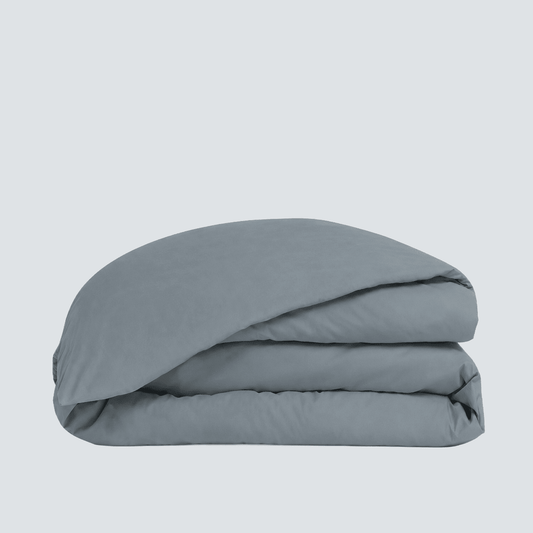
Regenerative Organic Cotton Sheet Set – Soft, Breathable & Sustainable
Regular price From $189.00Regular price -
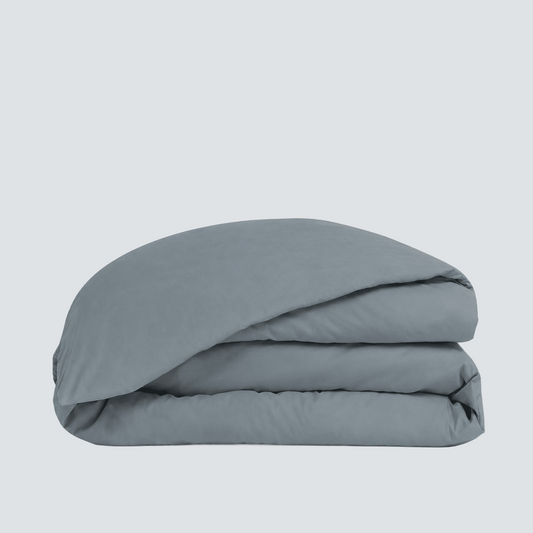
Organic Wool Comforter – All-Season Merino Duvet Insert
Regular price From $342.00Regular price$380.00Sale price From $342.00Sale -
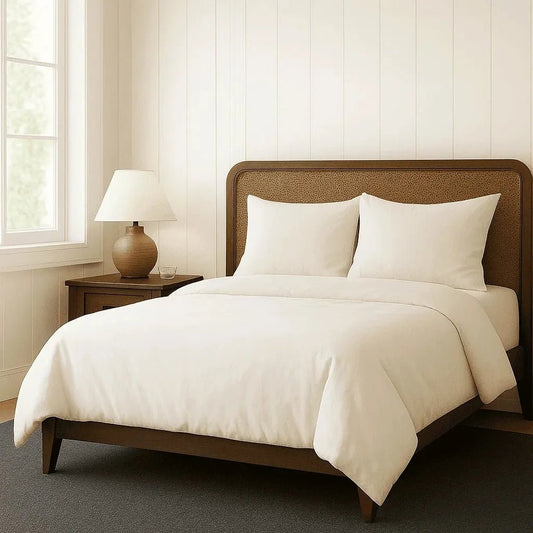
Organic Wool Comforter Set with Organic Cotton Duvet Cover
Regular price From $559.00Regular price -
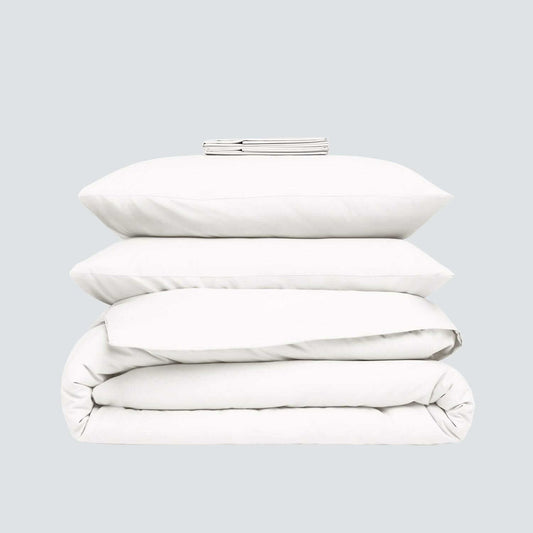
Organic Wool Bedding Set – Comforter, Duvet Cover & Sheets
Regular price From $598.40Regular price



Learn More About Natural & Sustainable Bedding
The framework above explains what actually makes bedding eco-friendly. These guides go deeper on the specifics.
What makes a sustainable comforter truly eco-friendly
Most sustainable comforters focus on materials. Here's why the farming system behind those materials matters just as much — and what to look for beyond the label.
→ What makes a sustainable comforter eco-friendly
Organic vs regenerative bedding: the complete guide
The difference between organic and regenerative isn't just certification — it's what the farming system does to fiber quality, durability, and long-term environmental impact.
→ Organic vs regenerative bedding
What is regenerative wool
Regenerative wool is more than a farming method — here's what it means for soil health, animal welfare, fiber quality, and why it produces better bedding materials.
→ What is regenerative wool
Natural fiber bedding guide
Cotton, wool, linen, bamboo — how natural and regenerative versions of each compare for breathability, durability, and environmental impact.
→ Natural fiber bedding guide
Why breathable bedding works better than cooling bedding
Eco-friendly bedding that lasts longer also tends to be more breathable. Here's why natural fibers outperform synthetic cooling materials overnight.
→ Breathable bedding guide
Down alternative comforters: what's actually inside them
Most down alternatives are petroleum-based synthetics. Here's what that means for your sleep environment and why it matters for eco-conscious buyers.
→ Down alternative comforters explained
What to Look for in Eco-Friendly Bedding
When shopping for eco-friendly bedding, focus on more than marketing language.
Look for:
- natural fibers instead of petroleum-based synthetics
- durable construction designed to last
- reduced chemical processing
- breathable materials
- certifications that support responsible production
- bedding designed for long-term use instead of rapid replacement
The best sustainable bedding systems combine environmental responsibility with long-term durability and everyday comfort.
Upgrade Your Sleep with Eco-Friendly Bedding
Discover how regenerative wool comforters and organic cotton sheets create a cooler, drier, more balanced sleep environment — night after night.
Crafted in New Zealand using ZQ-certified regenerative Merino wool and GOTS-certified organic cotton, our bedding is designed to regulate temperature, release moisture, and support deeper, more consistent sleep.
Let customers speak for us