
Quick Answer: Does Wool Help With Dust Mites?
Wool doesn’t attract dust mites — and in many cases, it helps reduce them.
Not because it kills mites, but because it removes the environment they need to survive.
Dust mites depend on warmth and humidity. Wool regulates both — staying drier and more breathable than most bedding materials. This is why wool is often recommended for both dust mite allergies and night sweats — it controls the humidity both problems depend on.
If your symptoms are strongest at night, switching to a breathable wool comforter for hot sleepers can help reduce the moisture buildup dust mites rely on.
Why Do Dust Mites Thrive in Most Bedding?
Dust mites feed on dead skin cells and multiply in environments that are:
Warm
Humid (typically above 50%)
Poorly ventilated
This is exactly what most bedding creates. And it’s the same environment that causes overheating and night sweating, which is why these issues often show up together.
Synthetic fills and down comforters trap heat and moisture close to the body. Over time, this forms a stable microclimate — ideal for mites.
If you’ve searched:
why is my bed making me itch
dust mites in bed symptoms
itchy in bed but nothing there
…the issue is often your bedding environment, not your skin.
This same moisture buildup is also why many people experience overheating — here’s a deeper look at why you wake up sweaty and how humidity affects sleep.
Why Wool Performs Differently (The Moisture + Airflow Advantage)
Wool works differently because it actively manages heat and humidity.
This is the same mechanism behind wool thermoregulation, where the fiber continuously balances heat and moisture to stabilize the sleep environment — preventing both overheating and the humidity dust mites depend on.
1. Wool stays drier
Dust mites need humidity above ~50% to survive.
Wool helps keep the microclimate closer to 30–35%, well below that threshold.
This controlled humidity range is a direct result of wool’s thermoregulation properties, which prevent the damp conditions that allow mites to multiply.
2. Wool breathes naturally
Air moves freely through wool fibers, preventing heat and moisture buildup.
3. Wool doesn’t form dense pockets
Down and synthetics compress into clusters — creating spaces where mites can live.
Wool stays open and springy, leaving fewer places for mites to settle.
4. Wool regulates temperature
Instead of trapping heat, wool releases it — reducing the warm, damp conditions mites prefer.
This is why wool consistently creates an environment where dust mites struggle to survive. By controlling humidity at the fiber level, wool removes the single biggest factor behind both dust mite growth and nighttime overheating.
If you want to see how different materials handle airflow and moisture, this guide to the best bedding materials for hot sleepers compares natural and synthetic fibers side by side.
Is Wool Itchy — Or Is It Dust Mites?
This is where most people get it wrong.
Many assume wool is causing their irritation.
But in reality, it’s often dust mites and trapped humidity.
Dust mites are one of the most common causes of:
itchy skin in bed
irritation with no visible cause
“crawling” sensations at night
waking up inflamed or sensitive
Wool behaves differently.
Because it regulates moisture and stays drier, it reduces the conditions that cause itching in the first place.
This is why people who think “wool makes me itch” often experience the opposite when they switch to breathable, untreated wool bedding.
If you’ve noticed irritation that only shows up at night, this breakdown of why your blanket makes you itch explains how bedding materials and trapped moisture can trigger it.
How This Connects to Hot Sleepers
This is the part most people miss. The link between hot sleepers and dust mites is humidity — not just heat.
The same conditions that cause dust mites also affect hot sleepers:
Overheating → sweating
Sweat → trapped humidity
Humidity → irritation + mite activity
That’s why many hot sleepers also experience:
itching at night
restless sleep
waking up uncomfortable even in a cool room
This is also why many hot sleepers struggle with nighttime irritation — overheating creates the exact conditions dust mites depend on.
If you’re dealing with both overheating and irritation, choosing the best comforter for hot sleepers and night sweats can help regulate temperature and reduce the humidity driving both problems.
Organic Wool Comforter | All-Season | Antipodean Home

$342.00
$380.00
Our organic wool comforter is a breathable, temperature-regulating wool duvet insert designed for hot sleepers and year-round comfort. This wool comforter naturally releases heat and moisture, helping you stay dry, cool, and comfortable all night — without synthetics or down.… Read more
How Wool Reduces Dust Mite Allergy Symptoms
When you reduce humidity, you reduce mites — and symptoms follow.
Common nighttime symptoms include:
Respiratory
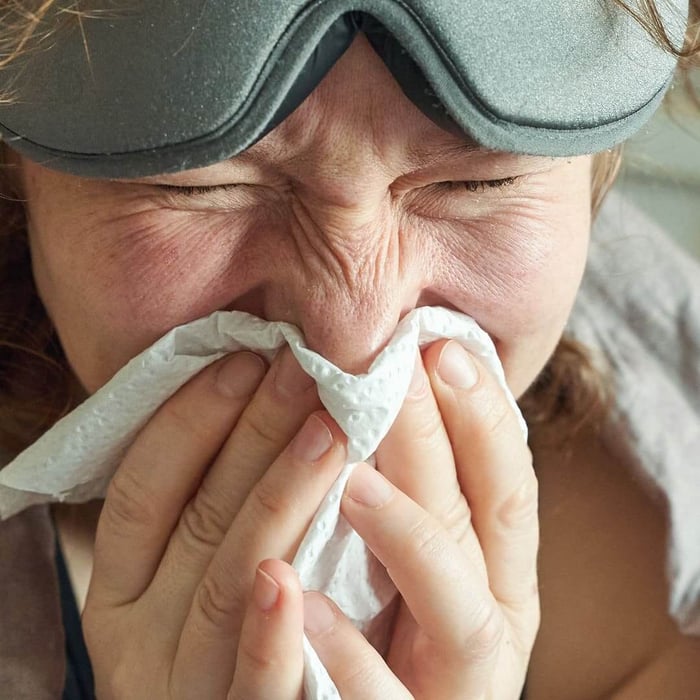
Congestion on waking
Sneezing
Night coughing
Skin
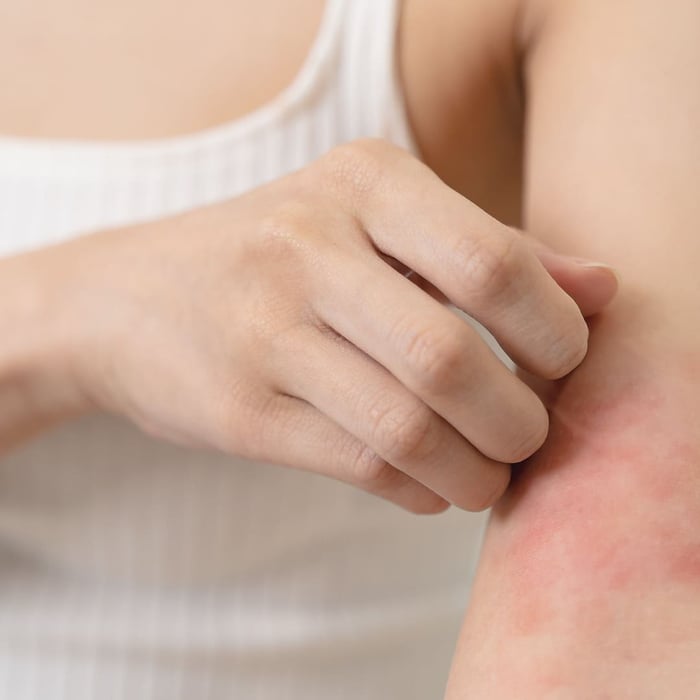
Itchy skin in bed
Small bumps or irritation
Sensitivity with no visible cause
Face + sinus
Puffy eyes
Sinus pressure
Morning headaches
If your bed sheets are making you itch or symptoms only appear overnight, dust mites in bedding are often the underlying cause.
Wool breaks the cycle:
Less humidity → fewer mites → calmer skin and breathing
Wool vs Down vs Synthetic: Which Is Worse for Dust Mites?
Down
Traps humidity
Forms dense clusters
Hard to fully clean
→ Creates ideal mite conditions
Synthetics (polyester, microfiber)
Trap heat and sweat
Hold oils and dust
→ High humidity = high mite activity
Wool
Breathable
Moisture-regulating
Naturally inhospitable to mites
If you’re comparing materials, the difference becomes clear when you look at moisture — here’s a full breakdown of wool comforter vs down.
What Is the Best Comforter for Dust Mite Allergies?
The best comforter for dust mite allergies isn’t one treated with chemicals — it’s one that removes the conditions mites need to survive.
That means bedding that:
regulates humidity
allows airflow
doesn’t trap heat
avoids synthetic materials that trap heat and moisture
A well-constructed organic wool comforter for dust mite allergies keeps airflow consistent through the night, preventing the damp conditions dust mites depend on.
This is why many people searching for a hypoallergenic comforter still struggle — the issue isn’t just the material, but whether it can control heat and humidity over time.
If you want to understand what actually makes a comforter hypoallergenic (and which materials perform best), see our guide to how to choose the best hypoallergenic comforter, where we break down how moisture control, airflow, and fiber structure affect allergen buildup.
Organic Wool Comforter | All-Season | Antipodean Home
$342.00
$380.00
Our organic wool comforter is a breathable, temperature-regulating wool duvet insert designed for hot sleepers and year-round comfort. This wool comforter naturally releases heat and moisture, helping you stay dry, cool, and comfortable all night — without synthetics or down.… Read more
What Should You Look for in Wool Bedding for Allergies?
Not all wool performs the same.
Look for:
Regenerative, traceable wool
No synthetic blends
Organic cotton outer layer
Breathable construction
If you’re specifically wondering whether wool is safe for sensitive skin, our guide to wool bedding and dust mites explains how natural fibers interact with allergies.
Do You Need to Clean Wool Bedding for Dust Mites?
Yes — but far less than synthetic or down bedding.
Do:
Air your comforter occasionally
Let sunlight refresh the fibers
Keep bedroom humidity below ~50%
Don’t:
Overwash
Store compressed
Use airtight plastic bags
Wool’s moisture control does most of the work naturally.
Is Wool Worth It for Allergy-Prone and Hot Sleepers?
If you struggle with:
Nighttime overheating
Itchy skin
Congestion
Restless sleep
Then wool is one of the simplest upgrades you can make.
Instead of masking symptoms, it changes the sleep environment itself — reducing both heat and humidity at the same time.
Verdict: Why Wool Works for Dust Mites, Itching, and Overheating
If your symptoms worsen at night, the issue is usually heat and moisture — not just allergens.
Wool helps by stabilizing your sleep environment. This is the core benefit of wool thermoregulation — controlling heat and moisture so both allergens and overheating are reduced at the source:
- Less humidity → fewer dust mites
Better airflow → less overheating
Drier conditions → calmer skin
It’s a simple shift — but it addresses the root cause behind multiple sleep problems at once.
Closing Thought
Most people treat itching, overheating, and allergies as separate problems.
But they often come from the same place.
Your sleep environment.
When you control heat and moisture, everything else starts to improve.
That’s what wool does — naturally, consistently, and without relying on chemicals.
For those looking to fix the problem at its source, a well-designed organic wool comforter helps regulate temperature and humidity throughout the night — reducing both overheating and the conditions dust mites depend on.
Shop Our Organic Bedding Collection
Frequently Asked Questions
Do dust mites cause itching in bed?
Yes — dust mites are one of the most common causes of itching in bed.
They thrive in warm, humid bedding and can trigger skin irritation, congestion, and allergy symptoms, especially at night.
Why do I feel itchy in bed but not during the day?
If you only feel itchy at night, your bedding is often the cause.
Dust mites build up in mattresses, comforters, and pillows — especially when heat and moisture are trapped overnight.
Can dust mites live in wool bedding?
Dust mites struggle to survive in wool bedding.
Wool regulates moisture and stays drier than most materials, creating an environment where mites are less likely to thrive.
Does wool help reduce dust mites naturally?
Yes — wool helps reduce dust mites by controlling humidity.
Instead of trapping moisture, wool absorbs and releases it, preventing the damp conditions mites depend on.
Why do dust mites thrive in down and synthetic bedding but not in wool?
Dust mites survive — and multiply — only when four very specific conditions line up: humidity, warmth, skin cells, and still air. Down and synthetic comforters unintentionally create this perfect cradle.
Here’s how it happens:
1. Humidity buildup
Synthetics and down trap sweat and body moisture. Even a small increase in humidity is enough to let mites feed and reproduce rapidly.
Wool, however, absorbs moisture vapor inside the fiber and releases it gradually, keeping the environment too dry for mites to thrive.
2. Warm, stagnant air
Synthetic and down clusters compress into tight pockets that hold onto warm air — exactly what mites prefer.
Wool fibers stay open and airy, constantly moving heat away from the body.
3. Micro-tunnels and hiding places
Down clusters form dense channels where mites can burrow and remain undisturbed.
Airlay-spun wool (your design) distributes tiny wool balls evenly, leaving no dense clumps for mites to “set up home.”
4. Chemical residues
Many synthetic comforters contain petroleum-based fibers and off-gassing chemicals. These residues trap oils and dust, giving mites more food.
Wool with organic cotton casing is naturally clean and free from synthetics, reducing irritant buildup.
The Overall Effect
Down + synthetics = high humidity, trapped heat, dense pockets → thriving mite population
Wool = dry, breathable, self-regulating → mites can’t survive long-term
This is why so many people report reduced itching, calmer skin, and fewer allergy flare-ups when they make the switch. Wool doesn’t “kill” mites — it removes the very conditions they need to live.
Is wool itchy, or is something else causing irritation?
Wool itself isn’t usually the cause of itching in bedding.
In most cases, irritation comes from dust mites, trapped moisture, or synthetic materials — not natural, breathable wool.
What is the best bedding for dust mite allergies?
The best bedding for dust mite allergies is breathable and moisture-regulating.
Materials like wool and organic cotton help reduce humidity, making it harder for dust mites to survive.
Can a wool comforter help with night sweats and allergies?
Yes — wool comforters help regulate both temperature and moisture.
This reduces overheating and limits the humidity that dust mites need, supporting more comfortable, uninterrupted sleep.