
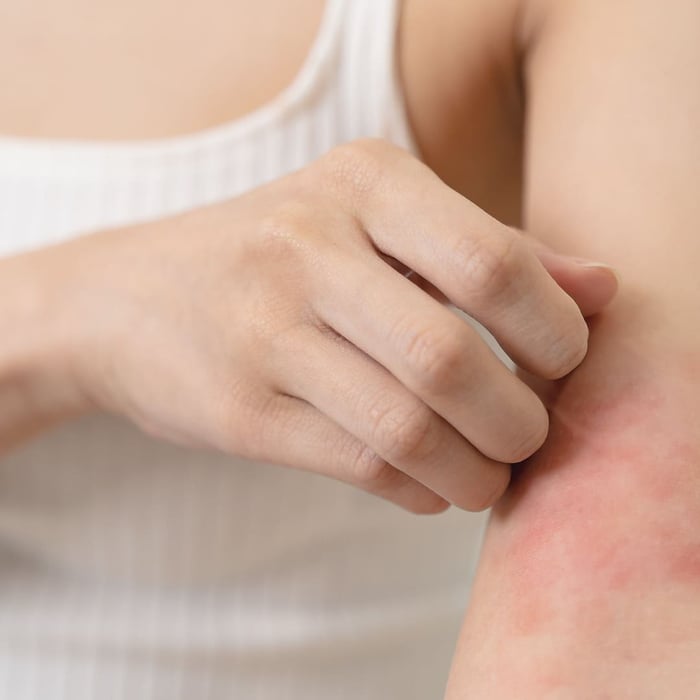

If your blanket makes you itch at night — especially without a rash or visible reaction — the cause is usually trapped heat and moisture, not a skin condition.
Most nighttime itching under blankets is irritation caused by a warm, humid sleep environment.
Quick verdict:
If itching happens mainly in bed and improves during the day, your blanket is likely trapping heat and moisture instead of releasing it.
Relief doesn’t come from creams or detergent changes.
It comes from changing how your insulation layer (your comforter) behaves overnight.
When Blanket Itching Is Caused by Heat and Moisture
You feel itchy mainly under the covers
The irritation worsens as the night goes on
You wake up warm, slightly sweaty, or clammy
Washing helps briefly — but the problem returns
When It Might Not Be Your Blanket
You itch throughout the day
Symptoms remain the same in different beds or environments
The irritation is unrelated to bedding changes
If itching persists across environments, it’s worth looking beyond bedding.
But when it’s mainly under the covers at night, the blanket is almost always the place to start.
Why Blankets Cause Itching at Night (Heat + Moisture Explained)
Blankets create a small climate around your body.
When that space stays:
warm
humid
low airflow
your skin becomes more reactive.
Warm skin increases nerve sensitivity.
Moist skin amplifies friction.
When vapor can’t escape, humidity builds — and irritation follows.
This doesn’t require sensitive skin.
It doesn’t require an allergy.
It just requires an insulation layer that doesn’t breathe well once body heat rises.
That’s why itching often appears gradually — not immediately when you get into bed.
The Most Common Reasons Blankets Make Your Itch
1. Your Blanket Traps Heat
When a blanket holds onto body warmth instead of venting it, skin temperature rises.
As skin warms:
blood vessels dilate
nerve endings become more reactive
sweat production increases
Even soft blankets can start feeling prickly once heat accumulates.
Synthetic materials like polyester and microfiber are common triggers because they restrict airflow and retain warmth inside the fill.
The issue isn’t softness.
It’s thermal behavior over time.
2. Detergent Residue in Blankets
If itching began shortly after washing, detergent residue may contribute.
Fragrances, brighteners, and fabric softeners cling to fibers — especially synthetic ones — and transfer to skin overnight.
But here’s the important part:
Even when detergent plays a role, washing rarely solves the root problem.
If the material continues trapping heat and humidity, irritation returns.
At that point, it’s structural — not chemical.
3. Dust Mite in Warm, Humid Blankets
Dust mites thrive in warm, humid insulation layers.
When a blanket holds moisture overnight, it creates the environment mites need to multiply. Washing may reduce surface exposure — but if humidity remains trapped, irritation often cycles back.
Again, the underlying factor is moisture retention.
Read more about how wool's fiber structure disrupts dust mite conditions — and why material construction matters more than labels →
4. Synthetic Blanket Fibers Breaking Down
Over time, polyester, microfiber, fleece, and acrylic can pill or develop static.
That breakdown increases friction against the skin.
Itching then becomes mechanical — not allergic.
Once friction increases, no detergent can reverse it. The fiber structure itself is the issue.
5. Heat and Sweat Buildup Under the Blanket
One of the most common patterns follows a simple sequence:
Heat rises
Sweat increases
Moisture gets trapped
Skin becomes hypersensitive
At that stage, fans or “cooling” finishes don’t fix the cycle.
If vapor can’t escape, humidity condenses against the skin.
The difference isn’t between a “cool” blanket and a “warm” one.
It’s between a blanket that releases moisture — and one that stores it.
Why Washing Your Blanket Rarely Fixes the Itching
Rewashing removes surface residue.
It does not change:
airflow
moisture vapor movement
heat retention
If the insulation layer traps humidity, irritation will return — even with clean bedding.
That’s why adding a cotton barrier, lowering the thermostat, or switching detergents often provides only temporary relief.
Until the overnight environment changes, the itch–heat cycle tends to repeat.
Learn more about how hypoallergenic comforters are designed to address heat, moisture, and irritant buildup →
The Real Solution for Blanket-Related Itching
If your blanket makes you itch at night, the problem is rarely your skin. It’s the microclimate your bedding creates.
Relief depends on choosing an insulation layer that:
releases moisture vapor before it condenses
prevents overnight humidity buildup
regulates warmth instead of storing excess heat
Until the insulation layer changes, irritation usually returns — no matter how clean the blanket is.
The Bedding Setup Designed to Stop Nighttime Itching
When irritation is driven by trapped heat and moisture, the insulation layer has to change.
👉 Explore the Hypoallergenic Organic Wool Comforter
Organic Wool Bedding Set (Insert + Cover)

$475.15
$559.00
Cooler Nights & Deeper Sleep — All Year Long A complete organic wool bedding set featuring our organic wool insert paired with a breathable organic cotton cover — designed to work together for easy, all-season sleep. What’s Included: 1 ×… Read more
Designed to address this problem by:
Releasing moisture vapor before it condenses into sweat
Venting excess warmth instead of storing it
Naturally resisting dust mite buildup without chemical treatments
Maintaining a dry, balanced sleep microclimate
This is typically the shift people make after detergent changes and “cooling” fabrics fail.
Why the Itching Keeps Coming Back Until the Blanket Changes
If you’re asking, “why does my blanket make me itch at night,” the cause is almost always environmental — not medical.
Heat and humidity build gradually.
Skin becomes reactive.
Irritation repeats.
Understanding the mechanism is the first step.
Changing the insulation layer is what completes the solution.
Continue Exploring
If nighttime itching is pointing to your bedding, these resources cover the next steps:
- Can You Be Allergic to Down Feathers? — If your symptoms are worst at night and improve when you travel, the issue is likely your comforter's structure, not a systemic allergy.
- Best Hypoallergenic Comforter — What Actually Works Long Term — Why most hypoallergenic labels don't hold up over time, and what to look for instead.
- Organic Wool Comforter & Duvet Insert — The bedding switch most people make after detergents, covers, and washing cycles stop working.
Shop Our Organic Bedding Collection
Frequently Asked Questions
Why does my blanket make me itch even when it looks clean?
Blankets trap far more than we realize: heat, body oils, detergent residue, and microscopic dust mites. When warmth and moisture build up, the fibers can irritate your skin — especially if your blanket is synthetic or tightly woven. Even a “clean” blanket can hold irritants deep in the layers.
Can certain blanket materials make sensitive skin itch more?
Yes. Synthetic fibers like polyester, microfiber, and plush fleece often trap heat and humidity against the skin, which intensifies itching. Down and feather blankets can shed tiny particles that irritate skin and sinuses. Natural fibers like wool or organic cotton are far gentler because they breathe and wick moisture instead of holding it in.
Can detergents or fabric softeners make my blanket itchier?
Absolutely. Many detergents leave behind brighteners, fragrances, and softeners that sit in the fibers long after washing. When humidity rises under your blanket, these chemicals loosen and transfer to your skin, causing itching, tingling, or mild redness. People often think it’s an allergy — but it’s usually buildup.
Why do synthetic blankets make me itch more than natural ones?
Because synthetics don’t breathe. When heat has nowhere to escape, your skin gets hot, damp, and irritated. That microclimate encourages dust mites and bacteria, which make the itching worse. Natural fibers like wool regulate temperature and humidity, making them a better option for people who itch when they sleep.
What causes nighttime itching from blankets, and how do I fix it for good?
Nighttime itching is almost always the result of trapped heat + moisture + irritants — a combination that turns your blanket into a micro-environment that your skin can’t tolerate. Here’s how each factor contributes:
Heat buildup: When a blanket doesn’t breathe, your skin temperature rises. Warm skin sends itch signals faster than cool skin does.
Moisture accumulation: Sweat becomes trapped, making your skin feel sticky or tingly. Moisture also breaks down fibers and detergent residue.
Synthetic fibers: Polyester, plush fleece, and microfiber cling to oils and detergents, causing friction and irritation.
Dust mites: They thrive in warm, humid bedding and can trigger itching even if you’re not allergic.
Feathers or down: Tiny broken particles can irritate your skin, eyes, and sinuses without causing a full allergy.
The fastest fix: switch to breathable, natural fibers like wool or organic cotton. These materials regulate temperature, wick away moisture, and don’t trap allergens in the same way synthetics do. Many people notice their nighttime itching improves within a day or two when they stop sleeping under heat-trapping blankets.