

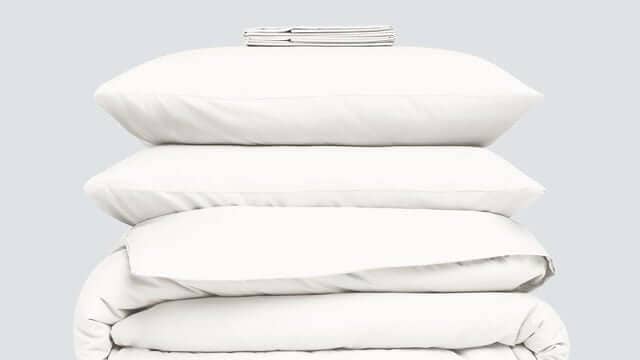
Organic Cotton Bedding: Complete Guide to Benefits, Certifications & Why Regenerative Is Better
If you're choosing between conventional and organic cotton bedding — or trying to understand what "regenerative" actually means — this guide will help you make that decision.
If you're primarily trying to solve night sweats or overheating at night, this may not be the material decision that fixes it. For that, see our breathable bedding guide →
If you've already decided organic cotton is right for you and want to know which specific sheets are actually worth buying, see our quality evaluation guide instead — this article is about whether organic cotton is the right material in the first place.
If you're researching organic cotton bedding, you're already asking the right question. What touches your skin for a third of your life should be clean, responsibly made, and aligned with long-term health — for you and the planet.
But not all "organic" cotton bedding is the same.
This guide explains:
- what organic cotton bedding actually means,
- how it differs from conventional cotton,
- the real pros and cons you should know,
- what certifications actually guarantee (and what they don't),
- why regenerative organic cotton represents a meaningful step forward.
Already decided? Shop our regenerative organic cotton sheets.
Regenerative Organic Cotton Sheet Set – Soft, Breathable & Sustainable

$189.00
Softer Sheets. Cleaner Sleep. Woven from 100% long-staple regenerative organic cotton, this GOTS-certified sateen sheet set combines a silky-smooth drape with natural, all-night breathability. Crafted without synthetic blends or chemical finishes, it’s the ideal upgrade for hot sleepers and sensitive… Explore Our Wool Comforters
Is organic cotton bedding actually better, or just a marketing claim?
Direct Answer: It is materially better for skin health and the environment, but "organic" is a baseline for safety, not a guarantee of luxury or performance.
The Evidence: Organic cotton bedding is grown without synthetic pesticides, herbicides, or genetically modified seeds. Certified organic standards also govern how cotton is processed, dyed, and finished — limiting toxic chemicals like formaldehyde that can remain in the final fabric. This reduces the risk of skin irritation and allergic reactions. However, softness and durability depend on fiber length (staple) and weave, not just the organic label.
How Organic Cotton Differs From Conventional Cotton
Conventional cotton is one of the most chemically intensive crops in the world. Its production often relies on heavy pesticide use, synthetic fertilizers, and aggressive processing to compensate for lower fiber quality.
Organic cotton takes a different approach by protecting soil health, avoiding chemical residues that can persist in fabric, and supporting safer working conditions in farming communities.
The Real Pros and Cons of Organic Cotton Bedding
Before choosing organic cotton sheets or bedding, it helps to understand both strengths and limitations.
The Pros
- Fewer Chemical Residues: Reduced risk of irritation for sensitive skin.
- Breathable and Comfortable: Naturally breathable fiber that feels lighter than heavily processed conventional sheets.
- Better for Sensitive Skin: Clear advantage for sleepers with allergies or eczema.
- Responsible Farming: Supports healthier soil and reduced environmental harm.
The Cons
- Higher Cost: Certification and responsible farming increase the price.
- Quality Variance: "Organic" doesn't automatically mean luxury; fiber quality and weave still matter.
- Still Extractive: Many organic systems reduce harm but don't actively restore ecosystems.
Hard Truths: What "Organic" Doesn't Mean
- It's not a performance guarantee: An organic sheet can be rough if it's short-staple cotton. Softness comes from fiber length and weave, not the organic label.
- It's not always "eco-perfect": Organic is a massive step up from conventional, but Regenerative is better than Organic because it actively restores soil biodiversity instead of just avoiding chemicals.
Understanding GOTS Certification for Organic Cotton Bedding
If you've been shopping for organic bedding, you've likely seen "GOTS certified" on product labels. GOTS (Global Organic Textile Standard) is the leading certification for organic textiles worldwide.
What GOTS Actually Certifies
- Organic fiber content: At least 70% or 95% organic fibers.
- Chemical restrictions: No toxic dyes, formaldehyde, or heavy metals.
- Processing standards: Wastewater treatment and environmental management.
- Social compliance: Fair wages and safe working conditions.
What GOTS Doesn't Guarantee
- Performance: It doesn't measure softness, durability, or sleep quality.
- Ceiling: It is a baseline standard; many brands exceed these requirements.
- Restoration: It focuses on avoiding harm, not necessarily ecosystem restoration.
GOTS certification is valuable — it ensures organic cotton bedding meets real standards rather than vague marketing claims.
What Is Regenerative Cotton?
Regenerative organic cotton builds on organic standards but goes further. Instead of focusing only on what not to do, regenerative farming emphasizes what should be actively restored.
- Rebuilding living soil through crop rotation and cover crops.
- Increasing biodiversity above and below ground.
- Improving water retention and erosion resistance.
Why Regenerative Organic Cotton Is Better
Regenerative organic cotton improves on organic cotton by creating healthier soil systems, requiring fewer interventions from field to fabric, and providing stronger ethical outcomes for farming communities.
Why the Price Difference?
Conventional cotton is artificially cheap because the costs are "externalized"—paid for by the planet and the workers rather than the consumer. Organic cotton internalizes these costs to ensure a safe, ethical product.
The Cost Breakdown
- Labor vs. Chemicals: Instead of cheap synthetic pesticides, organic farming relies on skilled human labor for manual weeding and biological pest management.
- Soil Investment vs. Extraction: Industrial farming "mines" the soil until it's dead; regenerative farming invests in crop rotation and cover cropping to restore the land.
- Certification vs. Claims: Rigorous third-party audits (GOTS, OEKO-TEX) require significant investment but provide the only real guarantee that your bedding is toxin-free.
- Quality vs. Quantity: Smaller, traceable batches allow for tighter quality control and stronger fibers compared to mass-produced industrial cotton.
The Bottom Line: You aren't paying a "premium" for a label; you are paying for a product that doesn't compromise your health or the environment.
Our Regenerative Cotton Sheets: Where This Decision Becomes Tangible
Our regenerative organic cotton sheet set is grown using soil-restorative farming methods. No synthetic inputs. No shortcut finishes. Just long-staple cotton, woven for airflow and durability.
Are Organic Cotton Sheets Worth It?
For many people, organic cotton sheets are absolutely worth it — especially if you're moving away from conventional or synthetic bedding. They offer cleaner materials, improved breathability, and fewer chemical concerns.
When Organic Cotton Makes Sense
Choose organic cotton bedding if you want to eliminate chemical exposure, have sensitive skin, or value third-party certified standards.
When to Consider Regenerative Instead
Consider regenerative organic cotton if you want materials that actively restore ecosystems and align your purchase with regenerative living principles.
Organic vs Regenerative Cotton Bedding: How to Choose
| If you value… | Consider |
|---|---|
| Chemical-free materials | Organic cotton bedding |
| Verified standards | GOTS-certified organic cotton |
| Long-term environmental restoration | Regenerative organic cotton |
| Alignment with regenerative living | Regenerative organic cotton |
| Fiber durability and performance | Regenerative organic cotton |
Where Certification Fits In
Most regenerative cotton programs still meet organic certification requirements, but not all organic cotton is regenerative. Key certifications include GOTS, USDA Organic, and OEKO-TEX Standard 100.
OEKO-TEX vs GOTS: What's the Real Difference?
OEKO-TEX tests the finished fabric for harmful substances (safe against skin), while GOTS looks at the whole supply chain: organic farming, restricted chemicals, and labor standards. Neither substitutes for the other.
Is organic cotton bedding actually better for you, or is it just a marketing claim?
Answer: It is a material reality, not a marketing claim. Conventional cotton is one of the most chemically intensive crops on earth; organic and regenerative cotton removes those toxins from your immediate sleep environment. Beyond the ethics, this results in a purer fiber that is more breathable and significantly gentler on sensitive skin.
Is long-staple organic cotton bedding worth paying extra for compared to regular cotton?
Answer: Yes, because the premium pays for durability and feel. "Long-staple" refers to the length of the individual cotton fibers; longer fibers create a smoother, stronger yarn with fewer ends poking out. This means your bedding is less likely to pill, feels significantly softer against the skin, and lasts years longer than standard cotton.
What exactly is organic cotton bedding and how is it made differently?
Answer: Organic cotton is grown without synthetic pesticides or fertilizers and processed without the harsh bleaching agents used in conventional bedding. By prioritizing soil health and natural inputs, the resulting fabric retains more of its natural integrity, making it more durable and breathable than chemically stripped conventional cotton.
The Bottom Line
Organic cotton bedding reduces harm. Regenerative organic cotton bedding helps restore what was depleted.
If You've Decided Organic Isn't Enough
If you've decided that reducing harm isn't the same as restoring ecosystems, the next step is evaluation. Check out our Best Organic Sheet Guide.
Frequently Asked Questions
What is organic cotton bedding?
Organic cotton bedding is made from cotton grown without synthetic pesticides, herbicides, or genetically modified seeds. This includes items like organic cotton sheets, duvet covers, and bed linens that prioritize cleaner farming practices and reduced chemical exposure.
Are organic cotton sheets better for sensitive skin?
Yes. Organic cotton sheets are often better for sensitive skin because they avoid harsh agricultural chemicals that can remain in conventional cotton fibers. Many people with allergies, eczema, or nighttime itching find organic cotton bed linens gentler and less irritating.
Is organic cotton bedding non-toxic?
Organic cotton bedding is significantly lower in toxins than conventional cotton, but “organic” alone doesn’t guarantee a fully non-toxic product. Processing, dyes, and finishes still matter. Certifications like GOTS help ensure stricter standards across the entire textile supply chain.
What does GOTS-certified organic cotton mean?
GOTS-certified organic cotton meets the Global Organic Textile Standard, which verifies organic farming practices, restricts toxic chemicals during processing, and enforces environmental and social responsibility throughout manufacturing.
Does organic cotton bedding sleep cooler than regular cotton?
Organic cotton bedding can feel more breathable than conventional cotton because healthier fibers allow better airflow. However, weave type, fabric weight, and finishing methods also influence temperature regulation.
What is the difference between organic cotton bedding and regenerative cotton bedding?
The difference between organic cotton bedding and regenerative cotton bedding comes down to intent and impact.
Organic cotton bedding focuses on avoiding harm. Organic farming standards prohibit synthetic pesticides, fertilizers, and genetically modified seeds. This reduces chemical exposure for both the environment and the end user, making organic cotton sheets a cleaner option for bedding.
However, most organic cotton systems are still designed to maintain soil health rather than actively improve it. Over time, soil can become depleted even under organic management if regenerative practices aren’t used.
Regenerative cotton bedding, by contrast, is built around restoration. Regenerative farming aims to:
Improve soil carbon levels
Increase biodiversity
Strengthen water retention
Support long-term farm resilience
Healthier soil produces stronger, more resilient cotton fibers. In bedding, this can translate into:
Longer-lasting sheets
Better breathability
Less reliance on chemical softeners
Improved overall fabric integrity
In short:
Organic cotton bedding is a meaningful upgrade from conventional cotton
Regenerative cotton bedding builds on organic principles while actively restoring ecosystems
For people seeking non-toxic bedding that aligns with long-term environmental health—not just reduced harm—regenerative cotton represents the next evolution beyond organic.
What is the difference between organic cotton sheets and regenerative cotton sheets?
The main difference between organic cotton sheets and regenerative cotton sheets lies in how the cotton is grown and the long-term impact of those farming practices.
Organic cotton sheets are produced using cotton grown without synthetic pesticides, fertilizers, or genetically modified seeds. This reduces chemical exposure, protects farm workers, and results in cleaner bedding for your home. Organic systems focus on eliminating harmful inputs and maintaining basic soil health standards.
Regenerative cotton sheets go further. Regenerative farming prioritizes actively rebuilding soil health, increasing biodiversity, improving water retention, and capturing atmospheric carbon through practices like crop rotation, cover cropping, and minimal soil disturbance. These methods strengthen the cotton fiber itself, often resulting in more resilient, breathable, and longer-lasting sheet materials over time.
From a sleep perspective, regenerative cotton can offer:
- Improved fiber integrity and durability
- Better moisture management
- Consistent softness without heavy chemical finishing
From an environmental perspective, the difference is even more pronounced:
- Organic cotton reduces harm
- Regenerative cotton restores ecosystems
For shoppers already choosing organic cotton sheets for health and sustainability reasons, regenerative cotton represents the next evolution — aligning cleaner sleep with long-term environmental regeneration rather than simply minimizing damage.
What's the difference between OEKO-TEX and GOTS certification?
They certify different things. OEKO-TEX Standard 100 tests the finished textile product for harmful substances, confirming it's safe against skin — it doesn't require the raw fiber itself to be organically grown.
GOTS (Global Organic Textile Standard) is broader: it certifies the entire supply chain, from organically grown fiber through processing and manufacturing, including environmental and labor practices along the way.
In short: OEKO-TEX certifies that the finished product is safe to use; GOTS certifies that the whole production process, from farm to fabric, meets organic and ethical standards. Many organic bedding brands carry both, since they cover different parts of the story.