

Table of Contents
- Why Down Comforter Allergies Are So Common (But So Misunderstood)
- Why Down Triggers Allergic Reactions: The Three Main Reasons
- How to Confirm You’re Dealing With Down Comforter Allergy Symptoms
- Short-Term Solutions (If You’re Not Ready to Replace Your Comforter Yet)
- The Long-Term Fix for Down Comforter Allergy Symptoms
- Why Wool Is the Best Natural Alternative
- FAQs on Wool Duvet Inserts, Comforters & Sustainable Bedding
TL;DR:
If you wake up congested, itchy, or puffy-eyed, you might be experiencing down comforter allergy symptoms.
Down traps heat and moisture, sheds tiny feather particles, and becomes a home for dust mites — a combination that can spark irritation every night.
Here’s how to recognize the signs, confirm the cause, and switch to something that actually supports deeper, cleaner sleep.
Short answer: If your symptoms (congestion, sneezing, itchy eyes) consistently kick in after you lie down and improve when you leave the bedroom, your down comforter or bedding environment could be a trigger. Real relief comes from reducing allergen buildup — not just masking symptoms.
| Symptom | A Common Sign It’s Bedding-Related |
|---|---|
| Nasal congestion at night | Symptoms worsen after lying down and ease during the day. |
| Sneezing or runny nose in bed | Reactions start within minutes of getting under the comforter. |
| Itchy or watery eyes | Irritation increases when your face is close to pillows and bedding. |
| Post-nasal drip in the morning | Mucus buildup overnight due to prolonged allergen exposure. |
| Itchy skin or mild rashes | Heat and moisture trapped in bedding irritate sensitive skin. |
| Symptoms improve outside the bedroom | Relief when traveling or sleeping elsewhere points to bedding as the trigger. |
If several of these symptoms show up mainly at night — or disappear when you change sleep environments — your down comforter or bedding setup may be contributing to the problem.
| If this sounds like you… | The most likely issue | What to do next |
|---|---|---|
| Symptoms appear mainly at night and improve during the day | Allergen buildup in bedding | Replace down comforter and pillows with breathable, allergen-resistant materials |
| Congestion worsens when lying down | Dust mites and moisture trapped in bedding | Focus on materials that regulate humidity and discourage dust mites |
| Itchy skin or rashes appear after sleeping | Heat and moisture irritation | Avoid synthetic fills and tightly sealed fabrics |
| Symptoms disappear when traveling | Bedroom-specific trigger | Prioritize bedding changes before medications |
| Allergy meds help a little, but not fully | Ongoing nighttime exposure | Reduce allergens at the source rather than masking symptoms |
Quick rule of thumb
If your symptoms start in bed, worsen overnight, and ease when you leave the bedroom, your comforter and pillows are far more likely to be the trigger than the air alone.
For sleepers who are experiencing allergy symptoms or irritation from bedding, our Hypoallergenic Bedding Collection features materials chosen for reduced irritants and breathable comfort.
Why Down Comforter Allergies Are So Common (But So Misunderstood)
Many sleepers live with down comforter allergy symptoms for years without realizing what’s causing them. The reactions don’t feel dramatic — they feel subtle and familiar: morning stuffiness, nighttime itching, a heavy feeling behind the eyes.
But down behaves differently from natural breathable fibers.
It insulates aggressively, traps body heat, and holds onto moisture. Inside that warm, humid environment, dust mites flourish.
And as feathers break down, they release micro-particles that can irritate skin, eyes, and sinuses — creating the classic pattern of down allergy symptoms.
If you’ve ever wondered why you feel worse at night and better just a few hours after waking, this is often the reason.
The definitive source for allergy bedding solutions
1. Respiratory Down Comforter Allergy Symptoms
Breathing issues are the most common early signs of bedding-related allergies.
Watch for:
A blocked or stuffy nose in the morning
Runny nose or sneezing bursts
Nighttime coughing
Throat irritation
Wheezing or chest tightness
Post-nasal drip
These allergic to down comforter symptoms happen because you’re breathing in particles that rise from your comforter as you shift during the night.
When your nose clears after getting out of bed, that’s one of the strongest signs of an allergy to down comforter materials rather than an environmental allergy.
Organic Wool Comforter | Made in New Zealand, Breathable All-Season Comfort

$342.00
$380.00
Sleep naturally better with our organic wool comforter Unlike down or synthetic comforters that trap heat, our spun wool design wicks away moisture and prevents overheating, so you stay cool & dry. Designed for deeper sleep with a gentle weight… Read more
2. Skin Symptoms Linked to Down Comforter Allergies
Skin reactions are a huge part of down comforter allergy symptoms, especially for hot sleepers.
Common patterns include:
Itchy skin at night
Red, irritated patches on the arms, chest, or neck
Tiny bumps or hives that fade by morning
A “prickly” sensation under the comforter
Dry, reactive skin that flares only in bed
Down traps moisture, and humidity alone can aggravate sensitive skin. Add feather dust and proteins into the mix, and you get the perfect setup for down comforter allergies symptoms.
If your skin looks perfectly normal during the day but flares up at night, that is a textbook sign.
3. Eye + Sinus Symptoms (The Most Overlooked Category)
Many sleepers don’t realize that down can trigger irritation around the eyes and sinuses — but these reactions are incredibly common.
Look for:
Puffy eyelids in the morning
Watery or burning eyes
Sinus pressure
Headaches when waking
A “foggy” or heavy feeling in the face
These down comforter allergy symptoms occur because heat rises — and with it, allergens from your comforter.
While you sleep, these irritants collect around your eyes and nose, creating a pattern that feels worse overnight and better once you’re upright again.
Regenerative Organic Cotton Sheet Set – Soft, Breathable & Sustainable

$189.00
Softer Sheets. Cleaner Sleep. Our organic cotton sheet set are simply better for the earth, and for your sleep. Grown on low-impact regenerative farms that actively heal the soil, our cotton is then woven and finished responsibly. This process eliminates… Read more
4. The Nighttime Pattern That Reveals the Truth
There’s a unique rhythm to down comforter allergy symptoms that separates them from general allergies:
Symptoms start soon after getting into bed
They worsen between 2–6 a.m.
They peak the moment you wake
They fade after leaving the bedroom
They disappear when you sleep somewhere else
That timing — nighttime to early morning — is the strongest indicator that the comforter, not the environment, is triggering down comforter allergies.
Why Down Triggers Allergic Reactions: The Three Main Reasons
1. Feather Proteins Can Trigger Immune Responses
Even washed or “hypoallergenic” down still contains trace proteins that can cause down allergy symptoms for sensitive sleepers.
2. Dust Mites Thrive Inside Down
Down creates a warm, moist environment. Dust mites love this. Their waste particles are one of the leading causes of:
Sneezing
Itching
Puffy eyes
Morning congestion
Once dust mites establish themselves, they’re almost impossible to fully remove from down.
3. Down Traps Heat and Moisture
This is the big one.
Your body heat gets trapped under the comforter, creating humidity. Humidity clings to allergens. Your pores open. Your skin becomes reactive. Your sinuses swell.
And the cycle repeats night after night — fueling allergy to down comforter symptoms that people mistake for seasonal allergies.
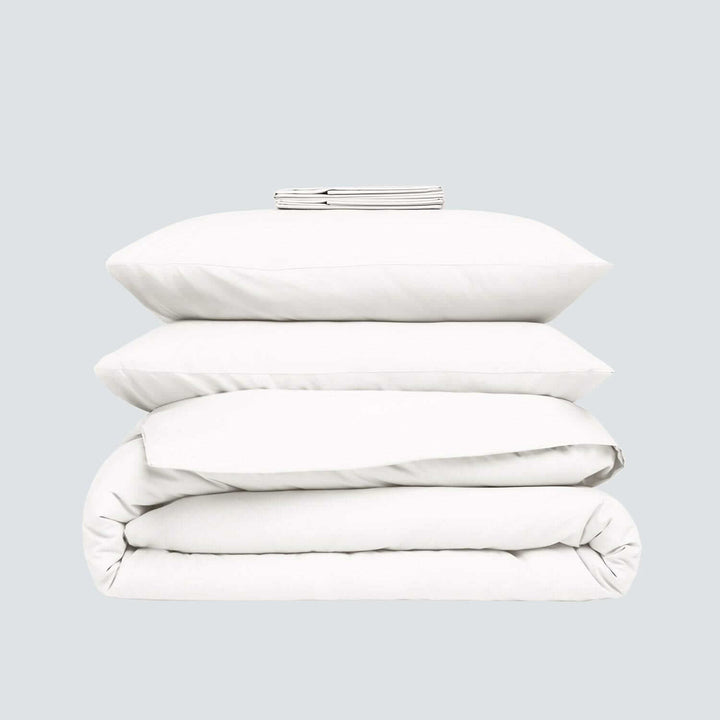
Sustainable & Regenerative Bedding Bundle | No More Night Sweats, Just Deeper Sleep
$598.40
$748.00
Cooler Nights & Deeper Sleep — Every Night Elevate your sleep with the only sustainable bundle crafted from regenerative New Zealand wool and organic cotton for true all-season comfort. These breathable, eco-friendly fibers naturally wick away heat and moisture to… Read more
How to Confirm You’re Dealing With Down Comforter Allergy Symptoms
A simple test can save you months of guessing.
The 1-Night Reset Test:
Sleep one night without your down comforter. Use a cotton blanket or layered throw.
If your down comforter allergy symptoms ease even slightly — less coughing, less itching, clearer breathing — you’ve found the culprit.
Other major clues:
Symptoms vanish when traveling
You sleep better on the couch
Reactions flare only when the comforter is in use
You feel a noticeable lift within minutes of getting out of bed
These are signature signs of down comforter allergies rather than environmental triggers.
Short-Term Solutions (If You’re Not Ready to Replace Your Comforter Yet)
These won’t solve the root issue, but they can reduce down allergy symptoms temporarily:
1. Wash bedding weekly
This removes dust mites and feather residue.
2. Use a true dust-mite-proof cover
Helpful for particles — but it won’t fix overheating or moisture.
3. Reduce humidity below 50%
Dust mites cannot thrive in dry environments.
4. Improve nighttime airflow
Fans or cracked windows reduce moisture under the comforter.
Again, these help… but they don’t change the fundamental problem: down doesn’t breathe.
For a detailed look at how airflow, temperature balance, and moisture influence comfort — and how these factors relate to irritation — check out our Ultimate Guide to Cooling Bedding.
The Long-Term Fix for Down Comforter Allergy Symptoms
To eliminate allergic to down comforter symptoms long-term, you need a fill that:
Breathes
Regulates temperature
Wicks moisture
Resists dust mites
Doesn’t shed particles
This is where natural materials outperform down every time — especially wool.
Organic Wool Duvet Insert & Bedding Set | Sustainable & Regenerative | Made in New Zealand

$475.15
$559.00
Cooler Nights & Deeper Sleep — All Year Long Looking for the perfect organic wool duvet insert and wool bedding set? This complete bundle includes both the duvet insert and cover. (The insert uses the same breathable, temperature-regulating design as… Read more
Why Wool Is the Best Natural Alternative
Wool solves every major cause of down comforter allergy symptoms in one move:
1. It releases heat instead of trapping it
No overheating = no sweating = far fewer reactions.
2. It wicks moisture away from the body
Low humidity = dust mites can’t survive.
3. It’s naturally hypoallergenic
Wool fibers don’t shed irritants like feathers.
4. It keeps temperature stable all night
Your skin stays dry, calm, and comfortable — without the flare-ups caused by down.
For sleepers who’ve spent years battling down comforter allergies symptoms, switching to wool is often the single biggest improvement in their sleep quality.
If you’re interested in how different bedding standards affect comfort and material quality, our Organic vs Regenerative Bedding Guide breaks down what certifications guarantee and why it matters for sensitive sleepers.
Explore Our Hypoallergenic & Allergy-Friendly Bedding Collection
FAQs on Wool Duvet Inserts, Comforters & Sustainable Bedding
Can someone suddenly become allergic to down?
Yes. Sensitivity can build gradually as feathers break down or as dust mites accumulate over time.
Will hypoallergenic down solve the problem?
It can reduce reactions, but not eliminate them. Hypoallergenic down still traps heat and moisture — the biggest triggers for nighttime symptoms.
How do I know the issue isn’t my pillow or sheets?
If the symptoms disappear when you switch out only the comforter, that’s your answer. The comforter usually traps the most allergens.
Why do symptoms feel worse in the morning?
Because you’ve spent 6–9 hours breathing in concentrated allergens in a warm, closed environment.
Is wool really better for allergies?
Yes. Wool’s breathability, dryness, and dust-mite resistance make it one of the best fills for sensitive, allergy-prone sleepers.
How do down comforter allergy symptoms differ from seasonal allergies?
Seasonal allergies follow you everywhere — in the car, at work, outdoors, at night, in the morning.
Down comforter allergies follow a very specific rhythm:
They start when you get into bed
They worsen the longer you sleep
They peak upon waking
They fade once you leave the bedroom
They disappear when the comforter is removed
This predictable bedtime-to-morning pattern is one of the strongest indicators that the comforter is the culprit — not pollen, pets, or the weather.